How to Compare Glabridin Bulk Prices by Active Content
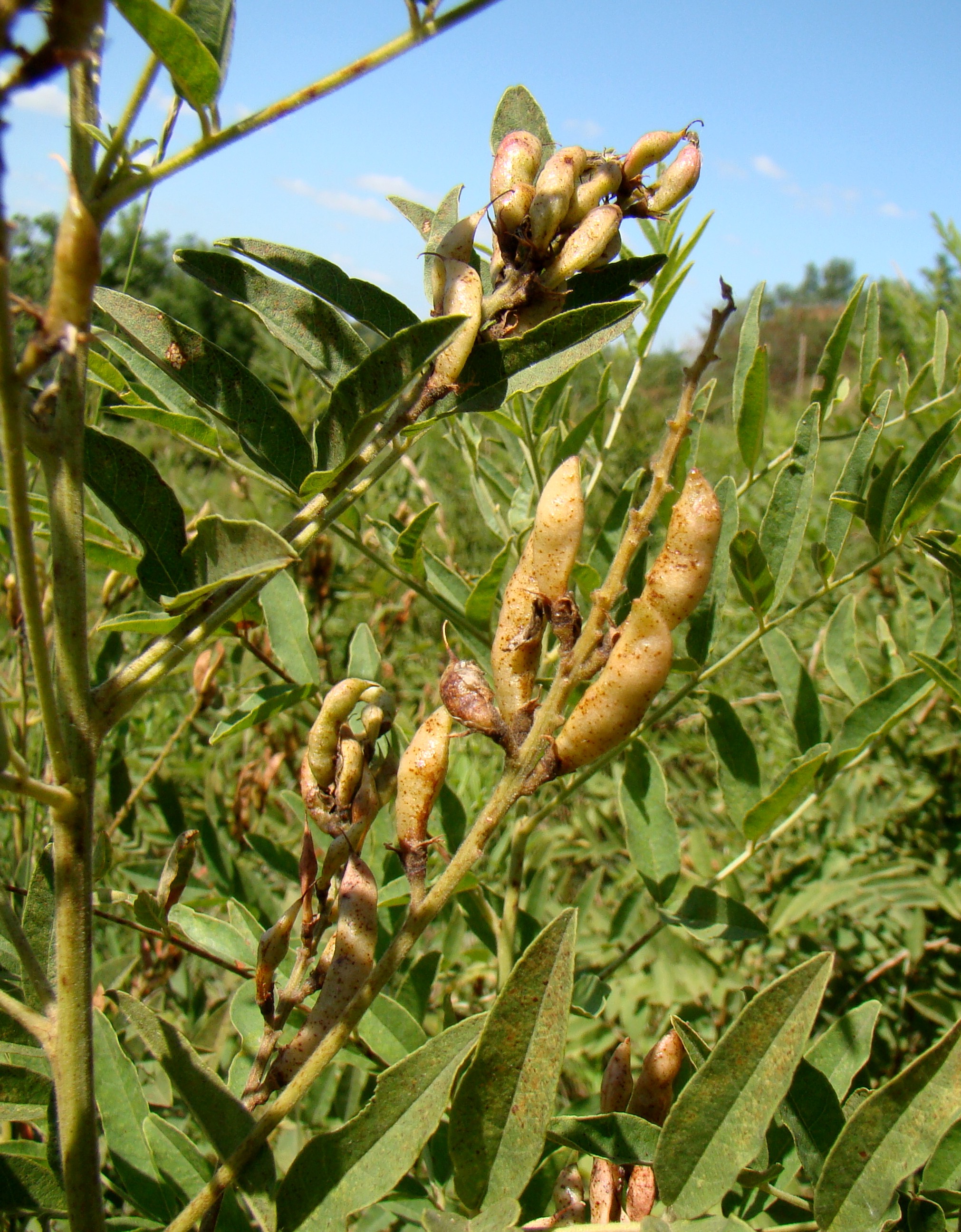
Image credit: Glycyrrhiza glabra by Юрий Данилевский, licensed under CC BY-SA 4.0.

Quick Answer
A Glabridin price per kilogram is not automatically a comparable price. Two supplier quotes can use different assay grades, package sizes, minimum order quantities, product formats and analytical documentation. Before deciding which offer is cheaper, put the quotes on the same basis.
Start with two calculations:
Active grams per kg = 1,000 × assay fraction
Cost per gram of active Glabridin = quoted price per kg ÷ active grams per kg
That means a 40% material contains 400 g of stated Glabridin per kg, a 90% material contains 900 g/kg, and a 98% material contains 980 g/kg. This gives buyers a useful first normalization metric.
But it is only the first layer. The lowest cost per gram of active can still be the wrong commercial choice if it comes with a high MOQ, expensive freight, extra testing, difficult formulation handling, weak documentation or a much larger initial cash commitment.
Why Glabridin Price per Kilogram Can Be Misleading
A displayed “$/kg” number looks simple, but Glabridin listings often are not describing the same commercial material.
A public-marketplace snapshot reviewed on September 17, 2026 illustrates the problem. On one Alibaba result page, a listing covering Glabridin 40%–98% displayed a price of roughly $100–115 with a 1 kg MOQ, while other Glabridin 40%/90% listings on the same result page displayed roughly $2,000–2,700 with a 1 kg MOQ. A separate Alibaba listing for 98% Glabridin used gram-based quantity tiers and a sample price rather than one simple commercial bulk price.
Those numbers should not be interpreted as a Glabridin “market price.” They are evidence that marketplace display prices can represent very different products, grades, units and commercial conditions.
A low displayed price may refer to:
a different assay grade
a botanical extract rather than the same purified material
a sample or entry price
a price tier that applies only above a certain quantity
a different package size
a formulated or carrier-containing product
a lead-generation price that still requires supplier confirmation
Before comparing price, confirm that you are comparing like with like.
What Should You Normalize Before Comparing Glabridin Quotes?
Price normalization starts before the arithmetic.
First, confirm product identity. Glabridin is a defined compound with CAS 59870-68-7, but commercial pages may also use licorice-extract language. If one quotation refers to a standardized botanical extract and another refers to a high-assay Glabridin material, the headline prices may not describe equivalent products.
If you are unsure whether the quoted materials are actually comparable, review our guide to Glabridin 40%, 90% and 98% supplier grades before doing the price calculation.
Then put the following fields beside every quote:
exact product name and identity
stated assay or grade
assay method or method reference where relevant
raw powder, standardized extract or formulated delivery system
quoted unit, such as g, kg or package
quantity that the displayed price applies to
sample, pilot and commercial MOQ
package size
whether freight is included
Incoterm or delivery basis, if supplied
required documentation, such as COA, specification, TDS and SDS
Only after those fields are clear should you treat two quotes as candidates for direct economic comparison.
How Much Active Glabridin Is in 40%, 90% and 98% Material?
The simplest common denominator is the stated amount of Glabridin active per kilogram of material.
Use:
Active grams per kg = 1,000 × assay fraction
For common commercial assay labels:
40% Glabridin
1,000 g × 0.40 = 400 g stated active per kg
90% Glabridin
1,000 g × 0.90 = 900 g stated active per kg
98% Glabridin
1,000 g × 0.98 = 980 g stated active per kg
This calculation does not tell you whether the product is better, whether the analytical methods are equivalent or what makes up the remainder of the material. It only converts the stated assay into a common quantity basis.
That distinction is important. A 40% product is not automatically “worse” than a 98% product, and a 98% product is not automatically the most economical. The correct comparison depends on what the product is, how it is documented, how it behaves in the formulation and what it costs to use.
How Do You Calculate Cost per Gram of Active Glabridin?
Once all quotes are expressed as price per kilogram, calculate:
Cost per gram of active Glabridin = quoted price per kg ÷ active grams per kg
For example, suppose a supplier quotes a 40% material at $800/kg.
Active content = 400 g/kg
$800 ÷ 400 g = $2.00 per gram of stated Glabridin active
Now suppose a 90% material is quoted at $1,500/kg.
Active content = 900 g/kg
$1,500 ÷ 900 g = about $1.67 per gram of stated active
This does not prove that the 90% product is the better purchase. It only shows that, on an assay-normalized material-cost basis, the 90% quote is lower in this hypothetical example.
How Do 40%, 90% and 98% Quotes Compare After Normalization?
Consider three hypothetical quotes. These figures are teaching examples only, not current Glabridin market prices.
Quote A — 40%
Quoted price: $800/kg
Stated active: 400 g/kg
Normalized active cost: $2.00/g
Quote B — 90%
Quoted price: $1,500/kg
Stated active: 900 g/kg
Normalized active cost: about $1.67/g
Quote C — 98%
Quoted price: $1,800/kg
Stated active: 980 g/kg
Normalized active cost: about $1.84/g
If you compared only price per kilogram, Quote A would appear cheapest.
If you compared only assay, Quote C would appear strongest.
After normalizing by active content, Quote B has the lowest stated active cost in this hypothetical example.
That is exactly why procurement teams should not use either assay percentage or price per kilogram as a standalone ranking signal.
The calculation is also useful when prices change. If Quote C increased from $1,800/kg to $2,200/kg, its active-cost metric would change immediately, while the assay would remain 98%. The economically preferred quote can change without any change in grade.
Why the Lowest Active Cost May Still Not Be the Lowest Total Cost
Cost per gram of active is a normalization tool, not a complete purchasing model.
A supplier with the lowest normalized material cost may still create higher total sourcing cost because of commercial and operational differences.
Check at least these cost layers:
MOQ and price breaks
freight and delivery terms
samples and qualification testing
third-party analytical testing where required
packaging
customs or import-related costs where applicable
required formulation loading
process changes caused by product format
documentation gaps that create additional qualification work
lead time
payment terms
rejected-batch or requalification risk
Avoid false precision here. Unless you have real values for each cost category, it is better to call this an effective sourcing-cost review rather than invent one universal “total cost” formula.
A higher material price can be commercially rational if the supplier provides a smaller qualification quantity, better documentation, fewer processing complications or lower logistical burden.
Likewise, a lower material price can become expensive if it requires additional testing, higher formulation loading or a large MOQ that exceeds the project’s current needs.
How Do MOQ and Price Breaks Change a Glabridin Purchase?
MOQ changes the decision because unit economics and cash commitment are different questions.
Suppose the hypothetical 90% Quote B remains $1,500/kg, or about $1.67 per gram of stated active.
If the supplier requires a 5 kg commercial MOQ, the initial material purchase is:
5 kg × $1,500/kg = $7,500
The order contains 4,500 g of stated Glabridin active, but the buyer must commit $7,500 before freight, testing or other costs.
For a commercial production run, that may be acceptable.
For an R&D or pilot project, another supplier offering a smaller sample or pilot quantity may be economically safer even if its normalized active cost is higher.
When you ask about MOQ, separate four different questions:
What is the minimum sample quantity?
What is the minimum pilot or trial order?
What is the commercial MOQ?
At what quantities do price breaks, packaging or shipping conditions change?
Do not copy one supplier’s MOQ into your sourcing assumptions as though it were an industry rule. Public supplier pages show materially different policies, and those policies can change by grade, packaging and order type.
What Should a Glabridin Quote Comparison Sheet Include?
A simple quote-normalization sheet is more useful than keeping supplier screenshots in separate tabs or email threads.
Use one row per exact product/grade and capture these fields:
Supplier
Exact product name
CAS or identity field where applicable
Grade / stated assay
Product format
Quote unit
Original quoted price
Normalized price per kg
Active grams per kg
Cost per gram active
Sample quantity
Pilot MOQ
Commercial MOQ
Initial material order value
Price-break tiers
Packaging
Freight / Incoterm basis
COA available?
Specification/TDS/SDS available?
Analytical method information available?
Lead time
Payment terms
Notes / unresolved questions
The purpose is not to create a complicated spreadsheet. The purpose is to force every supplier response into the same decision structure.
If Supplier A gives a price for 1 kg of 40% extract, Supplier B gives a sample price for 100 g of 98% material, and Supplier C gives a 25 kg bulk tier for 90% material, you do not yet have three comparable prices. You have three differently structured offers that still need normalization.
What Should You Ask Suppliers Before Accepting a Glabridin Price?
A useful price request should make it difficult for two suppliers to answer different questions.
Instead of sending only “What is your best price?”, ask for the quote on a defined basis.
For example, request:
Exact product and grade being quoted
Current batch or representative COA
Quoted assay and analytical method reference where available
Price for your target quantity
Sample and pilot-order pricing
Commercial MOQ
Price tiers at higher quantities
Package size
Freight or Incoterm basis
Lead time
Quote validity period
Available technical documentation
Any carrier, matrix or formulated-delivery information relevant to the exact product
If a supplier changes the grade or product format when responding to your target price, treat it as a new comparison row rather than overwriting the original quote.
What Is a Marketplace Display Price Actually Telling You?
A marketplace display price is useful, but it answers a narrower question than many buyers assume.
It usually tells you that a seller is publicly presenting an offer under a certain product title and price structure. It does not automatically tell you the final transaction price for your required assay, quantity, package, documentation and destination.
A displayed price can be:
a sample price
a starting price
a high-volume tier
a price for a different grade within the same listing
a gram-based rather than kilogram-based price
a package price
an indicative price that still requires negotiation
That is why Ingredexa does not treat one Alibaba or marketplace number as “the Glabridin price.”
Use marketplace data to identify offers and understand how sellers structure the market. Use normalized supplier quotations to make purchasing decisions.
Glabridin Price Comparison Checklist
Before deciding that one Glabridin quote is cheaper than another, work through the same sequence every time:
Confirm that the products are comparable in identity and commercial format.
Convert every quote into the same unit, preferably price per kg for the first normalization step.
Confirm the stated assay and calculate active grams per kg.
Calculate cost per gram of stated active.
Separate sample, pilot and commercial MOQ.
Calculate the initial material cash commitment.
Add the cost implications of freight, testing, packaging, documentation, processing and lead time.
Verify that the quote and technical documents apply to the exact grade being evaluated.
Compare suppliers only after unresolved identity or specification conflicts have been cleared.
A lower price/kg is not automatically a lower-cost sourcing decision. A higher assay is not automatically a better sourcing decision. The useful comparison is the one that keeps product identity, active content, order size and procurement risk on the same basis.
For deeper grade-selection questions, see Ingredexa’s guide: Glabridin 40%, 90% & 98% — How to Compare Supplier Grades.
You can use this checklist against the current offers in the Glabridin Sourcing Hub.
References
[1] PubChem. Glabridin, CID 124052 / CAS 59870-68-7. https://pubchem.ncbi.nlm.nih.gov/compound/59870-68-7
[2] Viswanathan V, Mukne AP. Development and Validation of HPLC and HPTLC Methods for Estimation of Glabridin in Extracts of Glycyrrhiza glabra. J AOAC Int. 2016;99(2):374–379. PMID: 27103104. https://pubmed.ncbi.nlm.nih.gov/27103104/
[3] Alibaba.com public Glabridin/licorice marketplace results reviewed September 17, 2026. Displayed prices and MOQ are dated marketplace observations, not verified transaction prices. https://www.alibaba.com/countrysearch/CN/glycyrrhiza-glabra-l.html
[4] Alibaba product listing for a 98% Glabridin product reviewed September 17, 2026, showing gram-based tier pricing and sample pricing. https://www.alibaba.co.uk/product-detail/Hot-Sale-High-Quality-Liquorice-Root_1600725594446.html
Related content
Continue exploring related ingredient research and sourcing guides.
Glabridin Grades Explained: How Buyers Should Compare 40%, 90%, 98% and Other Supplier Specifications
Compare Glabridin supplier grades by assay, HPLC method, carrier or matrix, formulation format and normalized active cost before requesting quotes or samples.
How to Read a Glabridin COA: HPLC Assay, Grade and Batch Verification
Learn how to read a Glabridin COA by checking product identity, batch number, HPLC assay, specification vs result, method context and missing documentation before comparing suppliers.
How to Read an Alpha-Arbutin COA: Assay, Hydroquinone and HPLC
Learn how to read an Alpha-Arbutin COA by checking identity, batch number, HPLC assay, hydroquinone, alpha/beta isomer context and regulatory claims before comparing suppliers.