Glabridin Grades Explained: How Buyers Should Compare 40%, 90%, 98% and Other Supplier Specifications
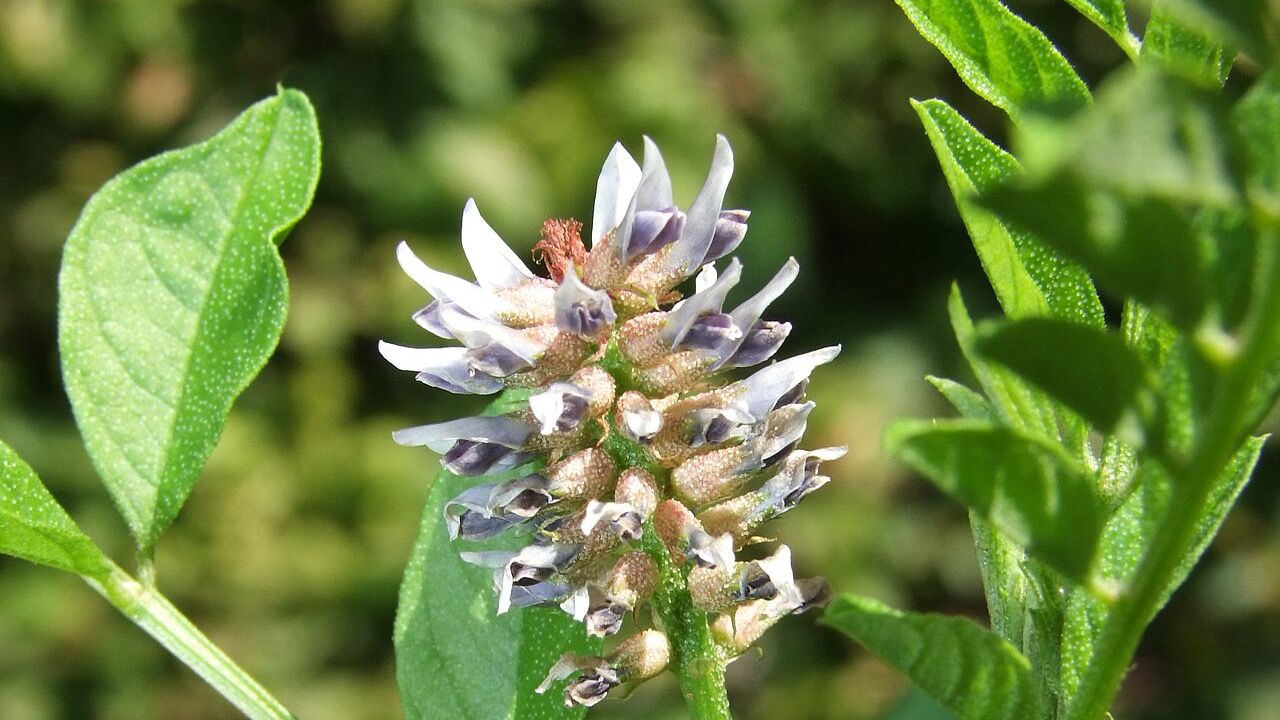
Image credit: Glycyrrhiza glabra inflorescence by Pharaoh han, licensed under CC BY-SA 3.0.

Quick Answer
Glabridin grades such as 40%, 90% and 98% describe the stated assay of Glabridin in a commercial material. They do not, by themselves, tell you whether two supplier products are equivalent or whether the higher-assay option is the better sourcing choice.
Before comparing price, normalize at least five things: product identity, assay and test method, matrix or carrier, formulation format, and cost-in-use. A 98% raw powder may suit one project, while a lower-assay delivery system may solve a different formulation problem. Likewise, two products both labeled “98% HPLC” are not automatically method-equivalent unless their analytical context and batch documentation are comparable.
For procurement, treat assay as one specification field—not as a complete product definition or a universal quality ranking.
What Is the Difference Between Glabridin 40%, 90% and 98%?
The percentage is the stated Glabridin assay in the commercial material. A 40% material reports a lower Glabridin fraction than a 90% or 98% material, but that does not create a universal good-better-best ladder.
Public supplier and marketplace pages refreshed on September 17, 2026 still show different commercial assay offerings rather than one repeated grade set across every seller. Current examples include 40%, 90%, 98% and 99%, with some pages also distinguishing products by formulation format. This is a dated market observation, not proof that these percentages are formal industry-standard grades.
That distinction matters because assay does not define the whole product. Two products with the same stated percentage may still differ in identity, analytical method, extract matrix, carrier system, physical form, documentation package or delivery format. Conversely, two products with different assay percentages may be designed for different formulation needs rather than representing simple low-quality versus high-quality versions of the same material.
Buyer rule: Assay percentage tells you how much Glabridin is reported. It does not tell you everything else you need to know before comparing suppliers.
When you receive a 40%, 90% or 98% quote, place the assay beside—not above—the following questions:
Are the products the same chemical or botanical identity?
How was the assay measured, and does the batch COA support it?
What makes up the non-Glabridin fraction?
Is the product a raw powder or a modified delivery system?
What is the normalized cost per gram of active after quantity and format are accounted for?
Buyer action: compare complete specifications first. Do not select a grade only because its percentage is higher.
Is Glabridin the Same as Licorice Root Extract?
No. Glabridin and Glycyrrhiza glabra root extract should not be treated as interchangeable procurement identities.
Glabridin is a defined compound with CAS 59870-68-7, molecular formula C20H20O4 and molecular weight of about 324.4 g/mol.[1] Scientific literature identifies Glabridin as a characteristic prenylated isoflavan associated with Glycyrrhiza glabra roots.[2] By contrast, Glycyrrhiza glabra root extract is a broader botanical material rather than a single defined compound.[7]
In sourcing, that means a supplier may be offering one of several materially different things: a botanical extract standardized to contain Glabridin, a higher-assay Glabridin material, or a formulated delivery system that contains Glabridin plus other components. Similar marketing language does not prove that these products are equivalent.
Marketplace fields can also conflict. In the September 2026 research review, at least one B2B listing used a Glabridin label while displaying an identifier inconsistent with the established Glabridin CAS. That kind of mismatch should be treated as a stop-and-clarify signal, not as proof of fraud or product quality.
Before comparing assay or price, make these fields agree:
product name
CAS number where applicable
botanical source
specification
exact commercial grade
batch COA
If those fields do not point to the same material, resolve the identity first. Price comparison is meaningless when the underlying materials may not be like-for-like.
What Does “98% HPLC Glabridin” Actually Mean?
“98% HPLC Glabridin” usually communicates two pieces of information: a stated assay value and an analytical approach. It does not, by itself, prove that two suppliers’ results are directly method-equivalent.
Peer-reviewed analytical literature supports the use of chromatographic methods for Glabridin quantification. A 2012 study validated an RP-HPLC method for Glabridin in licorice-containing materials, while a separate 2016 study developed and validated HPLC and HPTLC methods for Glabridin in Glycyrrhiza glabra extracts.[3][4]
The important procurement point is that legitimate analytical methods can differ. Published methods have used different chromatographic conditions and detection settings. Therefore, the phrase “HPLC tested” is useful, but it is not a complete method specification.
How Is Glabridin Purity Tested?
For sourcing purposes, HPLC is best understood as part of the evidence package supporting an assay claim. It tells you that a chromatographic method can be used to quantify Glabridin; it does not remove the need to understand how the supplier generated the reported result.
When comparing suppliers, look for enough context to answer:
What is the actual assay result for the lot being quoted?
What method or method reference was used?
What reference standard was used where relevant to your quality system?
Is the result reported on an as-is basis or another basis?
Does the supplier provide grade-specific analytical data when needed?
Do not assume one wavelength, one column or one supplier protocol is the universal standard. The analytical literature itself shows that valid methods can use different conditions.[3][4]
What Should Buyers Ask for Besides “HPLC Tested”?
Ask for the batch-specific COA first. Then request the method or method reference where available, the actual lot assay, and reference-standard or reporting-basis details if those matter to your QC process.
The goal is not to recreate the supplier’s laboratory. The goal is to confirm that the percentage used to define the grade has enough context to support a like-for-like comparison.
Buyer action: do not normalize two supplier grades as equivalent until the assay context is sufficiently clear.
What Makes Up the Rest of a 40% Glabridin Product?
A 40% assay tells you the reported Glabridin fraction. It does not identify the remaining 60%.
That remaining fraction should not be guessed from the assay number. Depending on the actual product, it may relate to a standardized botanical extract matrix, a declared carrier, a complexing or delivery system, or other disclosed components. Those possibilities must be confirmed from the supplier’s specification, TDS or composition information for the exact product being evaluated.
This matters because the non-Glabridin fraction can affect practical sourcing questions such as color, handling, formulation behavior and cost-in-use. A 40% standardized extract and a 40% formulated delivery system may both carry the same headline assay while behaving very differently in a formulation.
Ask the supplier:
Is this a standardized botanical extract or a more purified Glabridin material?
Is any carrier declared?
Is a complexing or delivery system used?
What does the specification or TDS say about composition?
Does the documentation apply to this exact grade?
Buyer action: treat “40%” as an assay statement, not as a full composition statement.
Is Glabridin Water Soluble?
Free Glabridin has low aqueous solubility. Peer-reviewed work has investigated cyclodextrin complexation and other delivery approaches specifically because water compatibility is a practical limitation.[5] A 2025 study also described Glabridin as insoluble in water and observed crystallization when a DMSO Glabridin solution was introduced into an aqueous cell-culture medium.[6]
This does not mean every commercial product marketed as “water-soluble Glabridin” uses the same technology. It means buyers should treat water-soluble formats as complete delivery systems that need their own documentation.
What Is Water-Soluble Glabridin?
In commercial sourcing, “water-soluble Glabridin” may describe a modified, complexed or formulated system rather than free Glabridin suddenly becoming intrinsically water-soluble.
One peer-reviewed study showed that an HP-beta-cyclodextrin inclusion complex substantially increased Glabridin aqueous solubility under its experimental conditions.[5] That supports the technical rationale for delivery systems, but it does not justify assuming that every commercial water-soluble product uses HP-beta-cyclodextrin, the same loading or the same formulation design.
For any water-soluble offer, verify:
exact Glabridin assay
carrier or complexing system, if disclosed
solubility data and test conditions
physical form
recommended formulation handling where provided
stability information relevant to your system
Can Water-Soluble Glabridin Be Compared Directly With 98% Glabridin Powder?
Not necessarily. They may be different commercial formats solving different formulation problems.
A high-assay raw powder may reduce the mass of material required to deliver a given amount of Glabridin, while a lower-assay delivery system may be designed to improve incorporation into a particular formulation environment. Comparing the two only by assay percentage can therefore create a false ranking.
Buyer action: define the formulation problem first, then compare products within the correct format category.
How Should Buyers Compare Glabridin Prices?
Do not compare Glabridin offers by displayed price per kilogram until you have normalized the unit, order quantity, stated assay and product format.
Marketplace prices can vary widely because listings may refer to different grades, quantities, package sizes, product formats and MOQ structures. A display price is therefore a market observation, not a confirmed like-for-like commercial quote.
A better first comparison is to normalize the quote by active Glabridin content.
How Do You Calculate Glabridin Cost per Gram of Active?
Start with two simple calculations:
Active grams per kg = 1000 × assay fraction
Cost per gram active = quoted price per kg ÷ active grams per kg
For example:
40% grade = 400 g active per kg
90% grade = 900 g active per kg
98% grade = 980 g active per kg
Now consider two hypothetical quotes. These numbers are examples only, not current market prices.
Supplier A
stated assay: 40%
quote: $400/kg
active Glabridin: 400 g/kg
normalized active cost: $1.00/g
Supplier B
stated assay: 98%
quote: $800/kg
active Glabridin: 980 g/kg
normalized active cost: about $0.82/g
In this hypothetical example, Supplier B has the higher price per kilogram but the lower cost per gram of stated Glabridin active. If Supplier B’s quote changed to $1,200/kg, the normalized active cost would rise to about $1.22/g. The economic preference changes with the quote; assay alone does not determine it.
Why Can Price per Kilogram Be Misleading?
Cost per gram active is only the first normalization layer. A full procurement decision may also change when you account for:
MOQ and price breaks
freight
samples and testing
packaging
documentation requirements
required material loading in the formulation
process changes caused by product format
rejected-batch risk
lead time
negotiated quote terms
A lower price/kg can become less attractive if the quoted material requires a higher loading, different processing, additional testing or more expensive logistics. Likewise, a higher-assay product is not automatically cheaper in use if its quoted price, handling requirements or formulation consequences offset the assay advantage.
Buyer action: compare effective sourcing economics, not marketplace display price alone.
How Do You Read a Glabridin COA?
Use the COA to verify the exact quoted grade and lot—not as a generic proof that every product on a supplier page is equivalent.
At minimum, check:
product identity
lot or batch number
stated assay result
analytical method or method reference where provided
appearance
grade-specific quality fields
relevant manufacture or test date where provided
whether the document clearly matches the exact commercial grade being quoted
If a supplier markets several Glabridin grades on one page, do not assume one generic COA applies to all of them. Ask for the batch COA that corresponds to the specific grade and lot under evaluation.
A COA is supplier documentation; it is not independent verification by itself. Depending on purchase value, formulation risk, quality requirements and regulatory exposure, incoming QC or third-party testing may still be appropriate.
Buyer action: use the COA to confirm identity, lot and assay context before quote comparison.
What Should You Check Before Buying Glabridin From a Supplier?
Qualify the material and its evidence package before judging the supplier. Public marketplace profiles or marketing copy alone are not enough to identify a “best” supplier.
The following signals do not prove that a supplier or product is unsuitable, but they should trigger additional verification:
the product name, CAS number, botanical source or specification do not agree
“HPLC tested” is claimed but no batch-specific COA is available
several grades are marketed, but only generic documentation is provided
a water-soluble product is offered without clear delivery-system or carrier information
the displayed price, unit, MOQ or package size is ambiguous
certification, application or stability claims are not supported by the technical package available to the buyer
one grade is presented as universally best for every formulation
the COA does not clearly match the quoted grade or lot
Treat these as due-diligence triggers, not as accusations. The correct next step is to ask for clarification or supporting documents before normalizing the offer against another supplier.
Buyer action: pause comparison whenever identity, specification or documentation conflicts remain unresolved.
What Is the MOQ for Glabridin Powder?
There is no single MOQ that should be presented as a universal market rule. Current supplier and marketplace pages show materially different sample and commercial minimums, and these values can change with grade, packaging, supplier policy and order type.
For procurement, separate four questions that are often collapsed into one “MOQ” field:
What is the minimum sample quantity?
What is the minimum pilot or trial order?
What is the commercial MOQ?
At what quantities do price breaks or packaging changes apply?
Any published MOQ example should be dated and attributed to the specific supplier or offer. Do not carry an old marketplace minimum into an evergreen article as if it were an industry norm.
Buyer action: request sample quantity, pilot quantity, commercial MOQ, price tiers and packaging separately.
What Should a Glabridin RFQ Include?
A good RFQ makes supplier responses comparable. Instead of asking only “What is your best price?”, send the same purchasing brief to each supplier.
Include:
exact Glabridin grade or acceptable assay range
product identity, CAS and botanical source where relevant
required product format: raw powder, standardized extract or formulated/solubilized system
intended formulation system where relevant
sample quantity
expected order quantity and, if useful, estimated annual volume
batch COA
specification, TDS and SDS
analytical method or method reference where needed by your QC process
carrier or matrix disclosure where relevant
MOQ and price tiers
packaging options
lead time
storage and shelf-life documentation
target-market documentation requirements
quote validity period
The purpose is standardization. If Supplier A answers one set of questions and Supplier B answers a different set, the spreadsheet may look comparative while the underlying offers are not.
Buyer action: send the same RFQ structure to multiple suppliers, then normalize the responses before choosing which samples or quotes deserve further review.
Which Glabridin Grade Should You Choose?
There is no single assay percentage that is automatically correct for every buyer. Choose the grade by procurement and formulation scenario, then verify the supporting documentation.
If you need a raw high-assay material:
Compare high-assay options by product identity, batch assay, analytical context, grade-specific specification, impurity or quality fields actually provided, and formulation compatibility. Do not assume all 98% materials are equivalent because the headline percentage matches.
If you need easier incorporation into an aqueous system:
Evaluate disclosed solubilized or delivery-system formats separately from raw Glabridin powder. Confirm assay, carrier or complexing system, solubility evidence and formulation guidance for the exact commercial product.
If the project is cost-sensitive:
Normalize cost per gram of active first, then add MOQ, freight, testing, required loading, processing consequences, documentation and reject risk. A cheaper price/kg or a higher assay can both be misleading when considered alone.
If the formula is color-sensitive:
Request grade-specific appearance or color information. Do not assume assay percentage alone predicts finished-product color.
If repeat-production consistency matters:
Prioritize grade-specific batch documentation, lot-to-lot controls and your own incoming-quality requirements. A successful first sample is not the same thing as a repeatable supply program.
Buyer action: use a scenario-based decision tree rather than a universal grade ranking.
Before You Request Glabridin Quotes
Before opening current supplier offers or requesting quotes, define four inputs:
What Glabridin assay or acceptable range do you need?
What formulation system and product format must the material work in?
What quantity are you evaluating now, and what quantity may be needed at scale?
What documentation package must the supplier provide?
Once those are defined, supplier offers become much easier to compare on a like-for-like basis.
Ingredexa does not name a permanent “best” supplier from public marketplace profiles. Compare suppliers only after you have defined the same purchasing requirements for each one.
Use the same assay target, product-format requirement, quantity range and documentation checklist for every supplier you evaluate.
This keeps the comparison focused on like-for-like procurement evidence rather than changing marketplace headlines, display prices or availability.
Ingredexa Sourcing Principle
A higher assay, a lower marketplace display price or a stronger supplier marketing claim is not a standalone quality signal. The purpose of this guide is to help buyers compare identity, analytical evidence, product format, documentation and normalized cost before moving to samples, RFQs or orders.
References
PubChem. Glabridin, CID 124052 / CAS 59870-68-7. https://pubchem.ncbi.nlm.nih.gov/compound/59870-68-7
Simmler C, Pauli GF, Chen SN. Phytochemistry and Biological Properties of Glabridin. Fitoterapia. 2013. https://pmc.ncbi.nlm.nih.gov/articles/PMC3795865/
Kamal YT, et al. Rapid RP-HPLC method for the quantification of glabridin in crude drug and in polyherbal formulation. Journal of Chromatographic Science. 2012;50(9):779–784. PMID: 22661460. https://pubmed.ncbi.nlm.nih.gov/22661460/
Viswanathan V, Mukne AP. Development and Validation of HPLC and HPTLC Methods for Estimation of Glabridin in Extracts of Glycyrrhiza glabra. J AOAC Int. 2016;99(2):374–379. PMID: 27103104. https://pubmed.ncbi.nlm.nih.gov/27103104/
Wei Y, et al. Characterization of glabridin/hydroxypropyl-beta-cyclodextrin inclusion complex with robust solubility and enhanced bioactivity. Carbohydrate Polymers. 2017;159:152–160. PMID: 28038744. https://pubmed.ncbi.nlm.nih.gov/28038744/
Liu H, et al. Overestimated cytotoxicity and underestimated whitening efficacy of glabridin: A result of its poor solubility in DMSO. PLoS One. 2025;20(6):e0325247. PMID: 40478921. https://pubmed.ncbi.nlm.nih.gov/40478921/
COSMILE Europe. GLYCYRRHIZA GLABRA ROOT EXTRACT. Cosmetic ingredient reference describing a root-derived extract of Glycyrrhiza glabra. https://cosmileeurope.eu/inci/detail/6154/glycyrrhiza-glabra-root-extract/