How to Read a Glabridin COA: HPLC Assay, Grade and Batch Verification
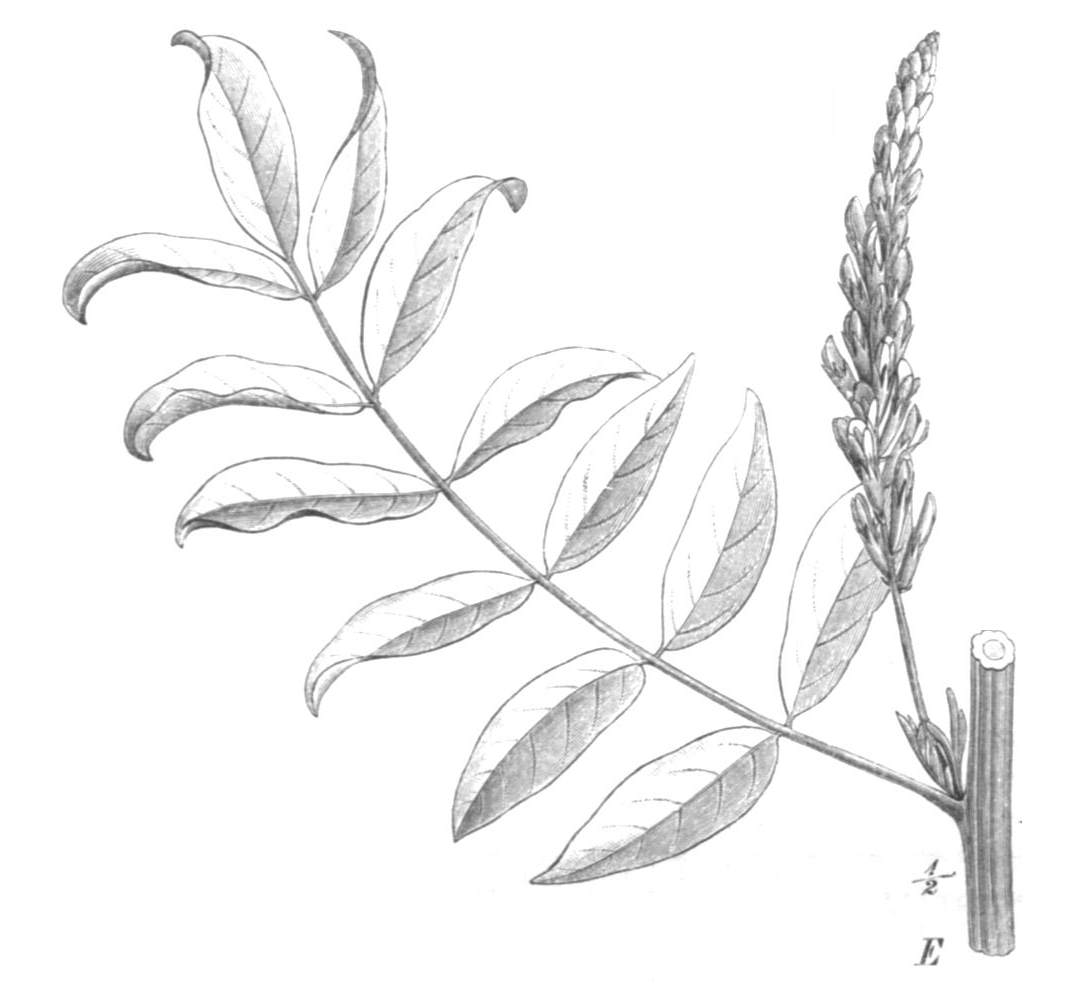
Image credit: Glycyrrhiza glabra botanical illustration by Paul Taubert, public domain.

Quick Answer
A Glabridin Certificate of Analysis is most useful when it answers a specific purchasing question: does this exact product, grade and batch meet the specification the supplier says it meets?
Start by matching the COA to the material you are actually evaluating. Check the product name, grade, product or catalog code, batch or lot number, and identity fields such as CAS 59870-68-7 where applicable. Then separate the specification from the actual test result. A specification such as “Purity (HPLC) ≥98%” is an acceptance criterion; the measured result for the batch is the number that tells you what the tested lot achieved.
Do not stop at the phrase “HPLC tested.” Peer-reviewed Glabridin methods use different chromatographic conditions, including different detection wavelengths, so two supplier COAs that both say “98% HPLC” are not automatically method-equivalent.[2][3]
For procurement, use the COA as one layer of evidence. It should support identity, grade and batch verification, but it does not by itself prove that a supplier is reliable or that independent incoming testing is unnecessary.
What Should a Glabridin COA Prove?
A COA should connect a defined material to test results against a stated specification.
That sounds simple, but procurement problems often start when a buyer treats a generic PDF as proof of every product a supplier sells. A supplier may offer several Glabridin grades, different formulation formats or multiple product codes. One certificate should not automatically be assumed to apply to all of them.
For a Glabridin sourcing decision, a useful COA should help you answer four basic questions:
What exact material was tested?
Which batch or lot does the document refer to?
What specification was the batch tested against?
What result did the batch actually achieve?
A COA is therefore different from a marketing specification page. A specification tells you what a product is intended to meet. A batch COA should tell you how a particular tested lot performed against the applicable specification.
Public Glabridin COAs illustrate this structure. For example, a Sigma-Aldrich COA for Glabridin ≥98% (HPLC) identifies the product number, batch number, CAS number and quality-release date, then presents separate Test, Specification and Result fields. Its HPLC purity line shows a minimum specification and an actual measured result for that batch.[4]
That structure is useful for buyers because it prevents a common reading error: treating the specification minimum as if it were the actual batch value.
Buyer action: before reading any individual test line, first confirm that the document belongs to the exact material you are comparing.
Is the COA for the Exact Glabridin Grade and Batch You Are Buying?
This should be your first document check.
Look for a combination of fields that ties the certificate to the quoted material. Depending on the supplier and product type, that may include:
product name
product or catalog code
commercial grade or stated assay
CAS number where applicable
batch or lot number
manufacture, test, release or certificate date where provided
supplier name
document revision or specification reference where provided
Then compare those fields with the quotation, product specification and packaging label.
If the quote says “Glabridin 90%” but the COA belongs to a 40% grade, the document is not evidence for the quoted product. If a product page lists 40%, 90% and 98% on one page, do not assume one generic certificate covers all three. Ask which certificate applies to the exact grade being offered.
Batch matching matters for the same reason. Public chemical suppliers often allow COA retrieval by lot or batch number. Aladdin Scientific, for example, provides a batch-number search for Glabridin certificates.[6] That does not mean every cosmetic ingredient supplier will use the same system, but it illustrates the core control principle: a certificate becomes much more useful when it is traceable to the actual lot.
A sample COA is different. Santa Cruz Biotechnology publicly labels its example Glabridin certificate with “Lot Number: SAMPLE.”[5] That document is useful for showing what the supplier may test, but it is not a certificate for the exact lot you are buying.
Buyer action: if you are making a real purchase decision, request the COA for the exact quoted grade and, when available, the actual or representative production lot.
How Do You Verify Glabridin Identity on a COA?
Identity comes before assay.
Glabridin is a defined compound with CAS 59870-68-7, molecular formula C20H20O4 and molecular weight about 324.4 g/mol.[1] But commercial sourcing pages may also use terms such as licorice extract, Glycyrrhiza glabra extract or standardized botanical extract.
Those names should not automatically be treated as interchangeable.
Before comparing HPLC percentages, confirm that the COA, specification and quotation are describing the same material. Check:
the product name
CAS number where applicable
commercial grade
botanical or source description where relevant
product code
batch number
any carrier, matrix or delivery-system description that materially changes the product format
This matters because a 98% Glabridin material, a standardized licorice extract containing Glabridin and a formulated Glabridin delivery system may have very different product definitions even if similar marketing language appears on supplier pages.
If the identity fields conflict, pause the comparison. Do not normalize price or rank assays until the supplier clarifies what material the certificate actually covers.
For a deeper discussion of product identity and grade differences, see Ingredexa’s guide to Glabridin 40%, 90% and 98% supplier grades.
How Should You Read the HPLC Assay Result?
Treat the HPLC assay as a measured result within an analytical context, not as a self-explanatory badge.
Peer-reviewed analytical literature shows that HPLC can be used to quantify Glabridin, but it also shows why the phrase “HPLC tested” is not enough on its own.
Kamal et al. published a validated RP-HPLC method using a C18 column, water/acetonitrile gradient and detection at 230 nm.[2] Viswanathan and Mukne later published validated HPLC and HPTLC methods for Glabridin, with the HPLC method using different chromatographic conditions and detection at 280 nm.[3]
Both are legitimate analytical studies. The fact that their conditions differ is the important procurement lesson: there is no reason to assume that every supplier’s HPLC percentage was generated under one identical method.
What Is the Difference Between Specification and Result?
The specification is the acceptance limit or target the product is expected to meet. The result is the measured value reported for the tested batch.
For example:
Specification: Purity (HPLC) ≥98.0%
Result: 98.7%
The first number tells you the acceptance criterion. The second tells you what the tested lot achieved.
Public COAs make this distinction visible. A Sigma-Aldrich Glabridin COA lists “Purity (HPLC)” with a specification of ≥97.5% and an actual result of 100.0% for the identified batch.[4] A Santa Cruz sample COA lists a purity specification of ≥99% and a sample result of 99.2%.[5]
These examples are not cosmetic-industry standards and should not be copied as universal specifications. They simply illustrate how a buyer should read the two columns.
A common mistake is to see “≥98%” on a supplier specification and record 98% as though it were the measured lot value. That can erase useful batch information.
Buyer action: capture both fields separately in your sourcing sheet: specification requirement and actual lot result.
Does “98% HPLC” Mean the Same Thing Across Suppliers?
Not automatically.
Two suppliers may both advertise “98% HPLC,” yet the documents can differ in method, reference standard, reporting basis, sample preparation or the exact product being tested.
The phrase tells you that HPLC is being used in relation to the assay claim. It does not tell you, by itself, that the two results are analytically interchangeable.
This does not mean buyers need to reject every supplier with a different method. It means method context becomes more important when you are trying to make a strict like-for-like comparison, qualify a critical raw material or reconcile an unexpected difference between suppliers.
If analytical comparability matters to your quality system, ask for enough information to understand:
the assay method or method reference
the reference standard used, where relevant
the reporting basis, where relevant
whether the result applies to the exact grade and lot
whether an HPLC chromatogram is available when needed
Do not impose one universal wavelength, column or mobile phase simply because one published paper or one supplier uses it.
What Method Information Should Buyers Ask For?
The right level of detail depends on the risk and purpose of the purchase.
For a first sourcing screen, a batch COA that clearly states the assay result and analytical method may be enough to decide whether a supplier deserves further review.
For a higher-risk qualification, repeated production or internal QC transfer, you may need more:
a method name or reference number
key sample-preparation information
reference-standard information
reporting basis
representative or batch-specific chromatogram
validation or verification information where relevant to your quality system
The goal is not to reconstruct the supplier’s entire laboratory before requesting a sample. The goal is to obtain enough analytical context for the decision you are making.
Buyer action: scale the documentation request to the risk. Do not ask for laboratory-level detail simply because a checklist says you can, but do not treat “HPLC tested” as complete evidence when your decision requires method comparability.
What Other Fields Should You Check Besides Glabridin Assay?
Assay is important, but a COA can contain other quality fields that affect whether the material fits the supplier’s own specification and your purchasing requirements.
Public Glabridin COAs and supplier documents show examples such as:
appearance
identity tests
water content, moisture or loss on drying
residue on ignition or ash-related tests
solubility or solution appearance
elemental or heavy-metal fields
optical rotation
microbial limits
residual-solvent information
particle or physical-property fields
Do not turn that list into a universal Glabridin standard.
The correct field set depends on what product you are buying. A research reference standard, a purified Glabridin powder, a standardized botanical material and a formulated delivery system may have different specifications and different quality risks.
The buyer’s job is to ask whether the fields on the COA are appropriate for the exact commercial grade and intended use—not whether the document copies another supplier’s certificate line for line.
A useful approach is to compare the COA against the supplier’s current specification sheet. If the specification contains a critical parameter but the COA omits it, ask why. If the COA contains a result without a clear acceptance criterion, ask how that result is evaluated.
Buyer action: build your checklist from the exact grade specification, not from a generic internet COA.
How Can You Tell a Sample COA From a Batch-Specific COA?
A sample COA shows document structure. A batch-specific COA shows results for an identified lot.
Signals that a document may be generic or illustrative include:
the lot number says “SAMPLE”
there is no lot or batch number
no release/test date is shown
the document is linked as a generic example across several grades
results look like specification limits rather than actual measured values
the product code does not match the quote
A sample COA is not useless. It can tell you which parameters the supplier usually reports and whether the documentation framework looks relevant to your quality process.
But it should not be treated as proof that the shipment you will receive achieved those same results.
Buyer action: use a sample COA for pre-screening, then request the exact or representative batch document before final qualification or purchase where your process requires it.
Should You Ask for the HPLC Chromatogram?
Sometimes.
A chromatogram can add useful analytical context, especially when the assay is commercially important, the material is high value, your QC team needs to review peak separation, or supplier results differ unexpectedly.
But a chromatogram should not become a decorative checkbox.
If no one on the buying or QC team is going to review it, collecting the file may add little value. Conversely, if a material is being formally qualified, a chromatogram plus method context may help the technical team understand the reported assay more confidently.
The practical question is not “Does every Glabridin supplier have to send a chromatogram?” It is:
Would the chromatogram materially reduce uncertainty in this purchasing or quality decision?
If yes, request it together with the method reference and batch COA so the documents can be reviewed as one analytical package.
What Should You Do If the COA Is Missing Method or Batch Details?
Do not force an incomplete document into a completed comparison.
Mark the offer as unresolved and ask for clarification.
For example, if a supplier quotes “Glabridin 98% HPLC” but the document has no batch number, no actual result and no clear product code, ask for:
the COA for the quoted grade
the current specification
the applicable lot or representative batch number
the actual assay result
the test method or method reference, where available
any missing identity or format information
If the supplier provides several grades, ask which COA belongs to which grade.
If a water-soluble or formulated product is involved, also ask what carrier, matrix or delivery system the certificate applies to when that information is relevant to comparison.
Until those conflicts are resolved, do not treat the quote as directly equivalent to a supplier that has already provided a clearly matched technical package.
This same rule applies to price. A low quote supported by ambiguous documentation should not automatically outrank a more expensive quote that is clearly defined. For the economic side of the comparison, see Ingredexa’s guide to comparing Glabridin bulk prices by active content.
Does a COA Prove Supplier Quality?
No.
A COA is one piece of the supplier-qualification process. It records what the supplier or testing organization reports for the specified material and batch. It does not independently prove every aspect of manufacturing control, batch consistency, authenticity or commercial reliability.
Depending on the purchase value, formulation risk, regulatory exposure and your internal quality system, additional controls may be appropriate, such as:
sample qualification
incoming identity or assay testing
third-party testing
supplier audits
review of supporting specifications and technical documents
batch-to-batch trend review after repeated purchases
The level of verification should be proportional to risk.
For a low-value research sample, a buyer may make a very different decision than for a repeated commercial raw-material program. Ingredexa therefore does not use “COA available” as a standalone supplier-ranking signal.
Buyer action: treat the COA as evidence, not as a substitute for the rest of supplier qualification.
Glabridin COA Buyer Checklist
Before accepting a Glabridin COA as comparable evidence, work through the same sequence every time:
Confirm the exact product name.
Confirm the commercial grade or stated assay.
Match the product/catalog code to the quote.
Confirm the batch or lot number.
Verify identity fields such as CAS 59870-68-7 where applicable.
Separate the specification from the actual result.
Record the actual Glabridin assay result.
Confirm whether HPLC is the stated assay method.
Request a method reference, reporting basis or reference-standard details when your comparison requires them.
Review the other grade-specific quality fields against the current specification.
Check test, release, manufacture or certificate dates where provided.
Confirm that the certificate applies to the exact material being purchased.
Mark missing or conflicting information as unresolved rather than guessing.
Decide whether a chromatogram, incoming QC or third-party testing is justified by the risk.
This checklist is intentionally process-based. It does not assume that every legitimate Glabridin grade must contain the same test panel.
What Should You Request From a Glabridin Supplier?
For a clean supplier comparison, send the same document request to every supplier you are seriously evaluating.
A practical request can include:
batch-specific or representative COA for the exact grade
current product specification
TDS and SDS
product identity and CAS information where applicable
actual assay result
HPLC method or method reference where needed
HPLC chromatogram where needed
carrier, matrix or delivery-system disclosure where relevant
supporting heavy-metal, microbial, residual-solvent or other reports when required by your specification or market
sample quantity and commercial MOQ
quote validity and lead time
Do not ask suppliers for every possible document simply to make the file package look larger. Ask for the evidence needed to resolve the purchasing decision.
Once the documentation is aligned, the three Ingredexa checks connect naturally:
Grade guide → Are these materials actually comparable?
COA guide → Does the technical evidence support the quoted grade and lot?
Price guide → Which comparable offer has the better effective sourcing economics?
That sequence is more reliable than starting with the cheapest marketplace listing and trying to justify it afterward.
References
[1] PubChem. Glabridin, CID 124052 / CAS 59870-68-7. https://pubchem.ncbi.nlm.nih.gov/compound/59870-68-7
[2] Kamal YT, et al. Rapid RP-HPLC method for the quantification of glabridin in crude drug and in polyherbal formulation. Journal of Chromatographic Science. 2012;50(9):779–784. PMID: 22661460. https://pubmed.ncbi.nlm.nih.gov/22661460/
[3] Viswanathan V, Mukne AP. Development and Validation of HPLC and HPTLC Methods for Estimation of Glabridin in Extracts of Glycyrrhiza glabra. J AOAC Int. 2016;99(2):374–379. PMID: 27103104. https://pubmed.ncbi.nlm.nih.gov/27103104/
[4] Sigma-Aldrich. Certificate of Analysis: Glabridin ≥98% (HPLC), G9548-BULK, Batch 0000481446, quality release 02 Sep 2025. https://www.sigmaaldrich.cn/certificates/sapfs/PROD/sap/certificate_pdfs/COFA/Q14/G9548-BULK0000481446.pdf
[5] Santa Cruz Biotechnology. Glabridin sample Certificate of Analysis, catalog sc-397145. https://www.scbt.com/p/glabridin-59870-68-7
[6] Aladdin Scientific. Glabridin analytical standard product page and lot/batch COA lookup. https://www.aladdinsci.com/us_en/glabridin-aladdin-scientific-g115746.html
Related content
Continue exploring related ingredient research and sourcing guides.
How to Compare Glabridin Bulk Prices by Active Content
Compare Glabridin bulk quotes by assay, active grams per kg, MOQ, freight and documentation—not price/kg alone. Includes formulas and a buyer checklist.
Glabridin Grades Explained: How Buyers Should Compare 40%, 90%, 98% and Other Supplier Specifications
Compare Glabridin supplier grades by assay, HPLC method, carrier or matrix, formulation format and normalized active cost before requesting quotes or samples.
How to Read an Alpha-Arbutin COA: Assay, Hydroquinone and HPLC
Learn how to read an Alpha-Arbutin COA by checking identity, batch number, HPLC assay, hydroquinone, alpha/beta isomer context and regulatory claims before comparing suppliers.