Kojic Acid vs Kojic Acid Dipalmitate: A Formulation & Sourcing Comparison
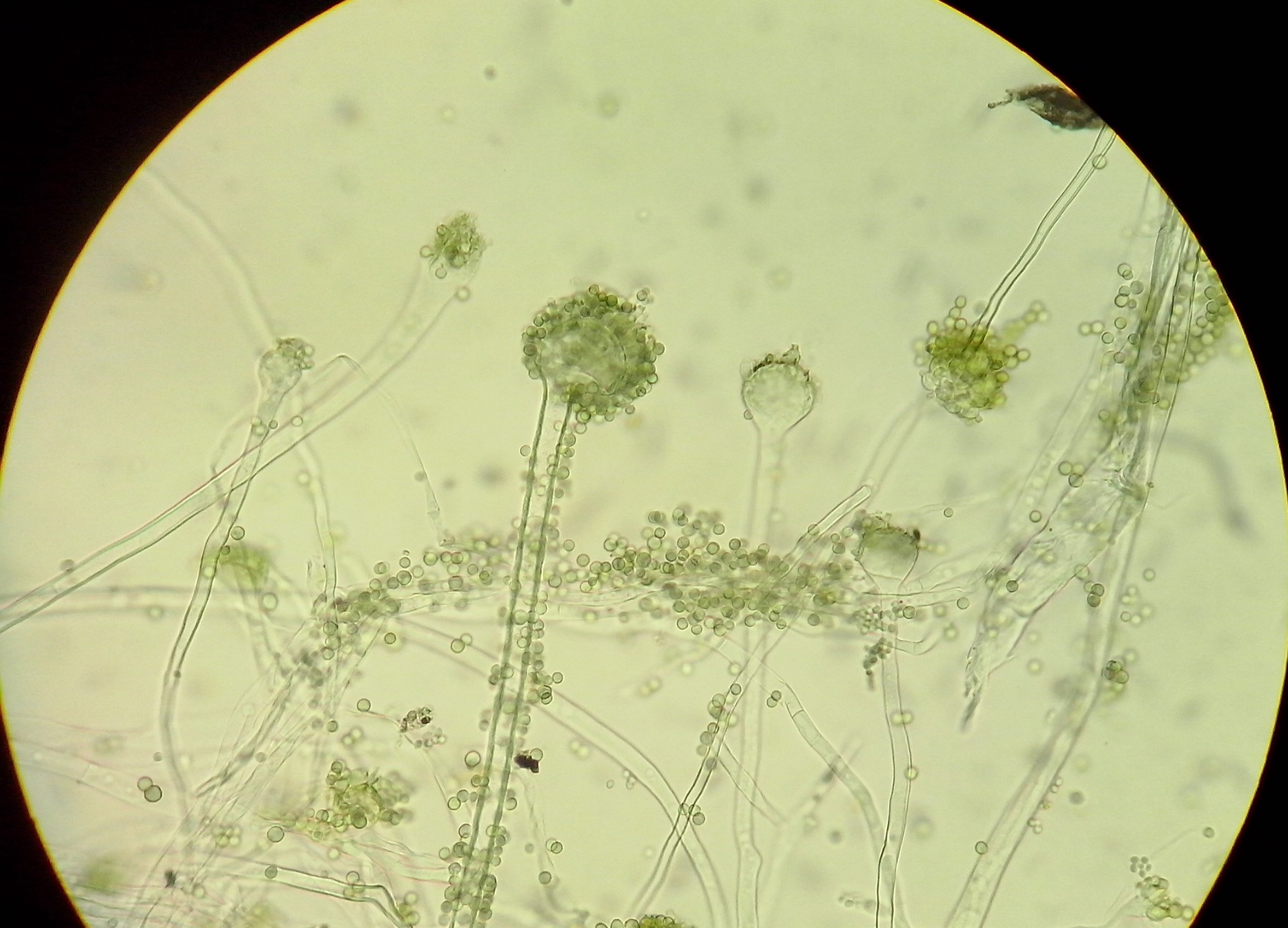
Image credit: Aspergillus oryzae growing on rice by Forrest O., licensed under CC BY-SA 2.0.
.jpg)
Quick Answer
Kojic Acid and Kojic Acid Dipalmitate are related, but they are not interchangeable grades of the same raw material.
Kojic Acid (KA) is CAS 501-30-4, with a molecular weight of 142.11 g/mol. Kojic Acid Dipalmitate (KAD or KDP) is a different esterified molecule, commonly identified as CAS 79725-98-7, with a molecular weight of about 618.9 g/mol.[1][2]
That difference changes how a buyer should compare the two materials.
KA is water-soluble in supplier reference data, while peer-reviewed literature describes KAD as almost insoluble in water.[3][5] This makes the formulation system one of the first decision points: a water-phase product and an oil/emulsion system may not need the same ingredient form.
Do not choose KAD only because a supplier calls it “more stable.” In a peer-reviewed oxidative-stress comparison, KAD actually degraded more rapidly than KA under the tested hydrogen-peroxide conditions.[5] The correct conclusion is not that one molecule is always more stable. Stability depends on the formulation, stress condition, processing environment and protection strategy.
Likewise, do not treat “98% Kojic Acid” and “98% Kojic Acid Dipalmitate” as equivalent active strength. They are different molecules and may even be assayed by different methods.
For sourcing, compare them in this order:
exact chemical identity
formulation and solubility requirements
stability evidence for the actual system
assay method and batch COA
regulatory scope for the destination market
like-for-like supplier economics
Only after those questions are resolved should price decide between suppliers.
What Is the Difference Between Kojic Acid and Kojic Acid Dipalmitate?
The most important difference is chemical identity.
Kojic Acid is a small pyranone molecule. PubChem identifies it as CAS 501-30-4, formula C6H6O4 and molecular weight 142.11 g/mol.[1]
Kojic Acid Dipalmitate is an ester derivative containing two long palmitoyl groups. Authoritative and analytical supplier sources identify CAS 79725-98-7 and a molecular weight of about 618.9 g/mol.[2][4]
For a buyer, that means KA and KAD should not be treated like “40% versus 98%” versions of one ingredient. They are different materials with different physical behavior.
A practical comparison looks like this:
Kojic Acid
CAS: 501-30-4
Molecular weight: 142.11 g/mol
Water behavior: supplier reference data lists it as soluble in water
Example supplier assay: TCI K0010 is specified above 98% by neutralization titration
Current EU identity-specific restriction: face and hand products, maximum 1% in ready-for-use preparation
Kojic Acid Dipalmitate
CAS commonly used for KAD: 79725-98-7
Molecular weight: about 618.9 g/mol
Water behavior: described as almost insoluble in water in peer-reviewed literature
Example supplier assay: TCI K0050 is specified above 98% by HPLC
SCCS Kojic Acid opinion: explicitly did not assess KAD because derivative data were not submitted
The sourcing implication is simple: confirm which molecule you need before comparing purity, price or suppliers.
Are Kojic Acid and Kojic Acid Dipalmitate the Same Ingredient?
No.
KAD is derived from Kojic Acid through esterification, but the resulting material has a different molecular structure, molecular weight and formulation behavior.
That distinction matters when reading supplier pages. Similar naming can create the impression that KAD is merely an upgraded grade of KA. It is not.
Before comparing two quotations, match at least:
exact product name
CAS number
molecular formula or molecular weight where provided
supplier product code
stated purity or assay
analytical method
batch COA
formulation or solubility description
If those identity fields conflict, stop the price comparison until the supplier clarifies the material.
This is not a theoretical concern. During current commercial-page review, Ingredexa found at least one supplier page that paired CAS 79725-98-7 with a molecular formula inconsistent with authoritative KAD identity sources. A mismatch like that does not prove fraud, but it is a valid reason to request the current specification and batch documents before treating the offer as comparable.
Which Is Water-Soluble and Which Fits Oil-Phase Systems?
Kojic Acid and KAD behave differently in water.
TCI lists Kojic Acid as soluble in water and also soluble in solvents including methanol and ethanol.[3]
A peer-reviewed KA/KAD stability study describes KAD as almost insoluble in water after esterification with two palmitic acid groups.[5]
That difference has an immediate formulation consequence.
If a product is designed around a primarily aqueous system, KA may be easier to evaluate as a directly water-compatible material. If the formula has an oil phase or emulsion structure, KAD may be evaluated as a lipophilic alternative, subject to the exact supplier’s incorporation instructions and the formulation’s stability testing.
Do not reduce the decision to “serum = KA” and “cream = KAD.” Real formulations can contain co-solvents, emulsifiers, delivery systems and processing steps that change the practical choice.
Buyer action: ask the supplier for solubility and incorporation guidance for the exact commercial grade. Do not assume a generic internet recipe applies to every product labeled Kojic Acid Dipalmitate.
Is Kojic Acid Dipalmitate Really More Stable Than Kojic Acid?
Not under every condition.
This is one of the most important corrections buyers should make when reading the current SERP.
Many supplier pages market KAD as a more stable derivative of Kojic Acid. That positioning is understandable because esterification changes the molecule and its formulation behavior. But “more stable” is not a universal property that can be stated without naming the stress condition.
A peer-reviewed study directly compared KA and KAD under liquid oxidative stress induced with hydrogen peroxide. Under those test conditions, KAD degraded more rapidly than KA.[5]
The authors did not conclude that KAD should never be used. Instead, they recommended formulation protection strategies for KAD, including antioxidant excipients, and discussed protecting KAD within an emulsion phase under the studied context.[5]
That leads to a better procurement rule:
Do not ask, “Which ingredient is more stable?”
Ask:
“Which ingredient is more stable in the formulation, packaging, processing and storage conditions we actually plan to use?”
Useful stability questions include:
What stress conditions has the supplier tested?
Was the test run on raw material or finished formulation?
Were light, heat, oxygen, metal ions or peroxide stress included?
What assay method was used to measure degradation?
Was the product tested in the same type of emulsion or solvent system you plan to use?
Does the supplier provide real-time or accelerated stability data?
A generic “KAD is more stable” claim is not enough for a high-value sourcing decision.
Which One Is More Effective for Brightening?
There is no evidence-based universal winner that applies independently of formulation and delivery system.
Kojic Acid has a long history of research as a tyrosinase inhibitor. KAD also has published biological and formulation evidence, but much of the modern KAD evidence is tied to specific delivery systems rather than a clean bulk-powder head-to-head comparison.
For example, a 2022 study developed a KAD-loaded ethosomal gel and reported favorable formulation stability and reductions in measured skin melanin and other skin parameters in its tested system.[7]
A later polymeric-nanocapsule study reported tyrosinase inhibition and a reduction in melanin content with the tested KDP formulation. Under specific in-vitro test conditions, that formulated system showed higher activity than a Kojic Acid solution used for comparison.[8]
Those results matter, but they do not prove that any bulk KAD powder from any supplier is automatically more effective than any KA material.
Delivery system, concentration, assay model, skin model and formulation can all change the result.
Buyer action: if a supplier claims “KAD is more effective than KA,” ask what evidence supports the exact claim. Look for the tested concentration, formulation system, comparison material and endpoint—not just a marketing summary.
How Should Formulators Choose Between KA and KAD?
Start with the formulation problem, not the ingredient reputation.
Evaluate these dimensions:
- Formulation phase
Does the product require a water-compatible ingredient, an oil-compatible ingredient or a specialized delivery system?
- Processing environment
What temperatures, mixing steps and hold times will the active experience?
- Oxidative and light exposure
Will the formula require antioxidants, chelators, airless packaging, opaque packaging or other protection?
- Target product type
A water-rich serum, an emulsion cream and an anhydrous product create different formulation constraints.
- Analytical control
Can your supplier and QC process distinguish identity, assay and degradation products at the level your project requires?
- Regulatory destination
Which ingredient identity is actually being placed into the finished cosmetic, and what rules apply in the country or region where it will be sold?
- Supply-chain economics
What are the MOQ, package size, sample policy, documentation quality, lead time and effective cost of qualifying the material?
The “best” choice is therefore project-specific.
Can You Compare 98% Kojic Acid With 98% KAD?
No—not as equivalent active strength.
First, they are different molecules.
Second, the analytical method may be different.
TCI currently lists its Kojic Acid K0010 material at greater than 98% using neutralization titration, while its Kojic Acid Dipalmitate K0050 is specified at greater than 98% by HPLC.[3][4]
Those two percentages answer different specification questions for different materials.
The molecular weights are also very different: 142.11 g/mol for KA versus about 618.9 g/mol for KAD.[1][2]
It may be tempting to calculate a “Kojic Acid equivalent” based only on molecular weight. That would create false precision.
A molecular-mass ratio does not tell you:
how much KAD reaches the relevant skin layer
whether or how rapidly it is transformed in the intended biological context
how the delivery system changes exposure
whether tyrosinase inhibition is equivalent
what use level is justified
whether stability losses are comparable
Therefore, Ingredexa does not recommend converting KAD into a universal KA-equivalent potency number for supplier ranking.
What Should You Check on the COA and Specification?
Use different checklists for the two identities, then look for cross-document consistency.
For Kojic Acid, check:
exact product name
CAS 501-30-4
product code
batch or lot number
assay specification and actual result
analytical method
appearance
melting range or other identity/specification fields where used
solubility information relevant to your formula
impurity or quality fields required by your specification
manufacture/release date where provided
For KAD, check:
exact name: Kojic Acid Dipalmitate / Kojic Dipalmitate as applicable
CAS 79725-98-7 where that identity is being supplied
product code
batch or lot number
HPLC purity specification and actual result where HPLC is used
method reference where needed
melting range where part of the specification
structural identity evidence such as NMR where the supplier uses it
solubility / incorporation guidance for the exact grade
impurity and quality fields required by your specification
Current TCI data illustrate why the field set can differ. Its KAD product includes HPLC purity, melting-point and NMR structure confirmation, while its KA product uses a different purity method and different solubility information.[3][4]
Do not turn one supplier’s test panel into an industry standard. Use it as an example of the level of identity and method detail that may be available.
How Should Buyers Compare KA and KAD Prices?
Do not start by asking which ingredient has the lower price per kilogram.
First decide which material your formulation actually requires.
Then compare like with like.
For KA offers, normalize:
exact grade / identity
assay and method
quote unit
MOQ
package size
freight / Incoterm basis
sample and pilot quantity
COA/specification package
lead time
required stability or incoming testing
Do the same separately for KAD offers.
Only after you have selected a formulation route should you compare the effective economics of KA versus KAD at the finished-product level.
That comparison may include:
actual formulation use level supported by your development work
stabilizers or antioxidants
emulsifier or solvent requirements
processing changes
packaging
stability testing
rejected-batch risk
regulatory work
supplier qualification and incoming QC
A material that costs more per kilogram may still be cheaper to commercialize if it reduces another meaningful cost. The reverse can also be true.
Without real formulation data, avoid inventing a universal “total cost” winner.
What Is the Current EU Regulatory Difference?
The regulatory comparison must stay tied to exact chemical identity.
The European Commission’s SCCS final opinion on Kojic Acid concluded that Kojic Acid is safe as a skin-lightening agent at concentrations up to 1% within the scope assessed.[9]
Importantly, that same SCCS opinion states that derivatives such as Kojic Acid Dipalmitate were not included because no data were submitted.[9]
The EU subsequently added Kojic Acid, CAS 501-30-4, to Annex III through Commission Regulation (EU) 2024/996. The current entry identifies face and hand products with a maximum concentration of 1% in ready-for-use preparation.[10]
For sourcing teams, two mistakes should be avoided.
Mistake 1: assuming the KA 1% restriction automatically applies to KAD.
Mistake 2: assuming that because KAD was excluded from the SCCS Kojic Acid opinion, KAD is therefore unrestricted, approved or safe at any concentration.
Neither conclusion follows from the cited sources.
Regulatory review should verify the exact INCI/chemical identity, product category, destination market and current legal text before commercialization.
Sourcing Red Flags
Pause supplier comparison when you see any of the following:
The product name and CAS number do not match.
The molecular formula or molecular weight conflicts with authoritative identity sources.
A supplier uses “Kojic Acid” and “Kojic Acid Dipalmitate” interchangeably.
The COA does not match the quoted product code or batch.
Purity is stated without an analytical method.
“98% KA” and “98% KAD” are presented as equivalent strength.
“KAD is more stable” appears with no test condition or formulation evidence.
“KAD is more effective” appears with no study, concentration or comparison system.
An EU compliance statement applies the Kojic Acid 1% rule to KAD without identity-specific legal support.
A marketplace price is compared without checking unit, MOQ, package and exact material.
Which One Should You Choose? A Buyer Decision Tree
If the formulation is primarily water-based and direct aqueous compatibility is important:
Evaluate Kojic Acid first, then solve its real stability, processing and regulatory constraints.
If the formulation requires a lipophilic material or an oil/emulsion-compatible route:
Evaluate KAD, but request product-specific incorporation and stability data rather than assuming the ester is automatically stable in every system.
If the reason for choosing KAD is only “it is more stable”:
Pause and ask for the condition-specific evidence relevant to your formula.
If the reason for choosing KAD is only “it is more effective”:
Ask for comparative evidence that matches the intended delivery system and endpoint.
If the project is for the EU market:
Run an identity-specific regulatory check. Do not transfer the KA Annex III rule to a derivative by name similarity.
If both materials appear technically viable:
Run formulation prototypes and compare stability, performance, manufacturing complexity and effective sourcing cost using the same acceptance criteria.
What Should Your Supplier RFQ Include?
Send every serious supplier the same request structure.
For either material, request:
exact ingredient/product name
CAS number
product code / grade
current specification
batch-specific or representative COA
assay and analytical method
TDS and SDS
sample quantity
pilot and commercial MOQ
package size
target-quantity price
price-break tiers
freight / Incoterm basis
lead time
quote validity
storage requirements
stability data relevant to the exact material
destination-market compliance documents where applicable
For Kojic Acid, also ask for the formulation and storage controls needed to manage discoloration or degradation risk in the intended system.
For KAD, also ask for:
solubility / incorporation instructions
evidence supporting any “improved stability” claim
structural identity controls used by the supplier
the exact HPLC method or method reference where needed
formulation-system stability data where available
The objective is not to collect the largest document package. It is to resolve the decision.
Ingredexa’s comparison sequence is:
Identity → Are these actually KA and KAD as claimed?
Formulation → Which physical form fits the planned system?
Evidence → What do stability and efficacy data actually support?
COA → Does the batch evidence support the quoted specification?
Regulation → What applies to this exact identity and destination market?
Economics → Which qualified option gives the better effective sourcing outcome?
That sequence is more reliable than starting with a supplier headline such as “stable Kojic Acid” and building the decision around it.
References
[1] PubChem — Kojic Acid, CID 3840.
[2] PubChem — Kojic Acid Dipalmitate, CID 15801174.
[3] Tokyo Chemical Industry — Kojic Acid K0010 product specifications.
[4] Tokyo Chemical Industry — Kojic Acid Dipalmitate K0050 product specifications.
[5] Monajjemzadeh F, et al. Comparative Stability of Two Anti-hyperpigmentation Agents: Kojic Acid as a Natural Metabolite and Its Di-Palmitate Ester, Under Oxidative Stress; Application to Pharmaceutical Formulation Design. Advanced Pharmaceutical Bulletin. 2022;12(2):329–335. PMID: 35620332.
[6] A rapid and reliable size-exclusion chromatographic method for determination of kojic dipalmitate in skin-whitening cosmetic products. Talanta. 2008;75(2):407–411.
[7] Tanveer N, Khan HMS, Akhtar N. Whitening effect of kojic acid dipalmitate loaded nanosized ethosomal gel for the treatment of hyperpigmentation: In vitro and in vivo characterization. Journal of Cosmetic Dermatology. 2022;21:6850–6862.
[8] Polymeric Nanocapsules Containing Kojic Acid Dipalmitate and Rosehip Oil: Development and Evaluation of Preliminary Efficacy and Safety for Skin Whitening. ACS Omega. 2025. PMID: 41487226.
[9] European Commission, Scientific Committee on Consumer Safety. Scientific Opinion on Kojic Acid, SCCS/1637/21.
[10] EUR-Lex — Commission Regulation (EU) 2024/996, Annex III entry 375 for Kojic Acid.
Related content
Continue exploring related ingredient research and sourcing guides.
How to Compare Glabridin Bulk Prices by Active Content
Compare Glabridin bulk quotes by assay, active grams per kg, MOQ, freight and documentation—not price/kg alone. Includes formulas and a buyer checklist.
Glabridin Grades Explained: How Buyers Should Compare 40%, 90%, 98% and Other Supplier Specifications
Compare Glabridin supplier grades by assay, HPLC method, carrier or matrix, formulation format and normalized active cost before requesting quotes or samples.
How to Read an Alpha-Arbutin COA: Assay, Hydroquinone and HPLC
Learn how to read an Alpha-Arbutin COA by checking identity, batch number, HPLC assay, hydroquinone, alpha/beta isomer context and regulatory claims before comparing suppliers.