How to Read a Reduced Glutathione COA: Why 99% HPLC Does Not Prove Low Oxidized Glutathione

Disclosure: We may earn a commission if you purchase through links on this page, at no additional cost to you.
Quick Answer
A reduced-glutathione listing that says 99% answers only one part of the purchasing question. It may describe an HPLC purity result, an assay, a supplier specification, or a number calculated on a particular basis. It does not automatically tell a buyer how much of the material remains in the reduced form, how much has converted to glutathione disulfide (GSSG), whether the method separates related substances, or whether the document belongs to the lot being offered. For a cosmetic or nutraceutical raw-material approval, the COA should be read as a chain of identity, method, result, and traceability—not as a single headline percentage.
The practical decision is straightforward: accept a reduced-glutathione offer only after the COA identifies the exact material and lot, defines what purity means, and provides enough redox-related information to judge oxidation risk. If GSSG or related-substance data are absent, the correct status is not low impurity; it is not stated, request clarification.
Start with the Material Identity, Not the Percentage
Reduced glutathione is commonly written as GSH or L-glutathione reduced. Its oxidized disulfide form is GSSG. Two GSH molecules can form one GSSG molecule when their thiol groups are oxidized. That chemical relationship is why a supplier can show a high total-glutathione or HPLC number while still leaving an unanswered question about the reduced fraction. The GSH/GSSG relationship is analytically meaningful, but the exact number depends on sampling, stabilization, preparation, and method conditions.[1-3]
On the COA, confirm at least the following identity fields:
- Product name and chemical form: reduced glutathione, not oxidized glutathione or a blend.
- CAS number and molecular formula, checked against the intended specification.
- Lot or batch number, manufacturing date, retest or expiry date, and the supplier document number.
- Declared grade and intended application, treated as a commercial claim until the supporting specification is reviewed.
- Packaging and storage conditions, especially protection from heat, moisture, light, and unnecessary air exposure.
A product page can be a useful discovery lead, but it is not a substitute for the controlled specification or lot COA. The Alibaba candidate used with this article is presented as a sourcing lead only: its page states 99% L-glutathione reduced and CAS 70-18-8, while the exact shipped grade, current lot result, GSSG limit, and controlled documentation still need to be confirmed with the supplier.
What Does 99% Actually Measure?
The word purity is often used too broadly. In a COA review, separate the field name, analytical method, calculation basis, and numerical result. A report might contain purity by HPLC, assay, reduced glutathione, total glutathione, or related substances. Those fields are not interchangeable simply because all are written as percentages.
| COA field | What it may describe | What it does not prove alone | Buyer follow-up |
|---|---|---|---|
| Purity by HPLC | Chromatographic area or a method-defined component result | That the peak is selectively reduced GSH, or that GSSG is low | Request method, reference standard, chromatogram or impurity separation statement |
| Assay | Quantity of a defined analyte on a stated basis | That the basis is comparable between suppliers or that the material is all reduced form | Confirm wet/dry basis, calculation, standard, and analyte identity |
| Total glutathione | GSH plus GSSG or another method-defined total | The percentage of active reduced GSH available in the supplied form | Ask for separate GSH and GSSG values where redox state matters |
| Related substances | Other detected or limited components | That every oxidation product, peptide impurity, or process residue is covered | Request the impurity list, limits, and method specificity |
The key question is not Does the COA say 99%? It is 99% of what, measured how, on which basis, and with what evidence that reduced glutathione was distinguished from its oxidized form? A high result can be commercially acceptable, but only when the field is defined well enough for the buyer's use.
Check Whether Reduced and Oxidized Forms Are Measured Separately
For a reduced-glutathione raw material, the most useful redox evidence is a separate result or limit for GSH and GSSG, supported by a method capable of distinguishing them. Published analytical methods have measured both forms by HPLC, HPLC-DAD, fluorescence derivatization, electrochemical detection, and LC-MS approaches. The methods differ in sensitivity, selectivity, sample preparation, and susceptibility to oxidation during handling.[2-6]
That last point matters during COA review. A sample can oxidize after collection or during preparation, creating an artificially high GSSG result. Conversely, a preparation that reduces GSSG to GSH can make the reduced fraction look better than the original sample. The literature therefore treats stabilization and preparation as part of the measurement problem, not as laboratory housekeeping.[2,4,5]
Ask the supplier five method questions:
- Are GSH and GSSG quantified as separate analytes?
- Is the result reported as a mass percentage, molar concentration, area percentage, or another basis?
- What reference standard and calibration model are used?
- How are samples protected from oxidation between opening, weighing, extraction, and injection?
- Does the method include specificity, precision, recovery, and stability information appropriate to its intended use?
ICH Q2(R2) is a useful framework for asking whether an analytical procedure is fit for its intended purpose. It is not a cosmetic raw-material specification by itself, but its concepts—specificity, accuracy, precision, range, detection or quantitation capability, and robustness—help a buyer judge whether a headline result is supported by a serious method.[7,8]
Read the COA as a Lot Document
A representative COA is not the same as a shipment-lot COA. Before approval, match the document to the commercial offer: the product name, grade, lot number, manufacturing site, pack size, dates, and specification revision should be coherent. A supplier may legitimately use a standard specification with a separate lot result, but the relationship should be visible.
| Review point | Acceptable evidence | Escalation trigger |
|---|---|---|
| Identity | Exact product name, CAS, form, and lot are consistent | COA says glutathione but does not define reduced or oxidized form |
| Result | Actual result and unit are shown against a stated limit | Only pass or a marketing percentage is supplied |
| Method | Method number or method description is traceable | HPLC is stated without analyte, detector, standard, or basis |
| Traceability | Lot, date, issuer, signature or controlled approval is present | Sample COA has no lot match or uses an unrelated product code |
| Storage | Storage and retest logic fit the material and packaging | Shelf life is stated without storage conditions or change-control information |
Do not reject a material solely because a public sample COA lacks every field. Instead, classify the gap. A missing GSSG field is a technical uncertainty; a missing lot number is a traceability problem; a mismatch between product identity and CAS is an identity hold. These have different purchasing consequences and should not be collapsed into one quality score.
Use a Risk-Based Release Decision
For a low-risk exploratory sample, a buyer may accept a provisional document set and run incoming confirmation testing before formula work. For a commercial cosmetic or nutraceutical batch, the release gate should be stricter. The decision should reflect the intended use, batch size, claim sensitivity, and cost of a failed production run.
- Release for quotation only: identity appears coherent, but GSH/GSSG separation or lot documentation is incomplete.
- Release for sample evaluation: exact lot COA is available and the buyer will verify identity and redox-related attributes independently.
- Release for production approval: specification, lot COA, method basis, packaging, storage, and change-control expectations are all aligned with the approved material.
- Hold or reject: identity conflicts, no traceable lot document, unexplained assay basis, or a redox-sensitive claim unsupported by the method.
Independent testing does not need to repeat every supplier test. A targeted panel may include identity confirmation, reduced glutathione assay, GSSG or related-substance determination, moisture or loss on drying, heavy metals where relevant, microbiological limits for the application, and packaging inspection. The exact panel should follow the approved specification and risk assessment.
How to Use the Current Alibaba Offer Without Overstating It
There are several common shortcuts that should be avoided. Food grade, cosmetic grade, GMP, ISO, or high purity describes a claimed market position or quality system signal; none of these phrases alone proves that the offered lot contains a defined reduced-GSH fraction or that the analytical method is selective for GSSG. Likewise, a supplier's statement that the material is stable does not define the exposure conditions, container closure, oxygen headspace, retest criteria, or allowable change in GSH/GSSG ratio. Stability is a study result tied to a material, package, method, and condition.
The same caution applies to application language. A listing may mention skin brightening, antioxidant use, supplements, or pharmaceutical applications. Those descriptions can help identify the commercial route, but they do not transfer clinical, regulatory, or formulation evidence to a different grade. A cosmetic buyer should still establish the intended INCI or raw-material identity, restricted-substance requirements, microbiological expectations, and local market compliance separately. A nutraceutical buyer may need a different impurity, residual-solvent, microbial, or food-document package. One COA cannot be assumed to satisfy every downstream use.
If a supplier cannot provide a separate GSSG result, the buyer has two defensible options: define an incoming test for reduced and oxidized forms, or approve the material only for an early sample screen with a documented limitation. What is not defensible is silently interpreting an unspecified 99% result as 99% reduced glutathione.
The current Alibaba product page is a sourcing lead, not independent proof of a compliant raw material. The listing presents a reduced-glutathione product with a 99% specification and a 1 kg minimum order. Those are useful screening signals for a buyer deciding whether to request documents; they are not evidence that every batch meets the same result or that GSSG is controlled to a particular limit. The two sourcing paths are intentionally separated:
Current Sourcing Entries
Before placing a production order, ask the supplier to confirm the exact Product ID, current specification revision, latest lot COA, separate GSH/GSSG reporting or related-substance limit, method basis, packaging, storage, retest period, MOQ, lead time, and whether the shipped material is manufactured by the listed company or supplied through another party. None of those answers should be inferred from the redirect or from the product title.
A Compact COA Approval Checklist
- Reduced form is explicitly named and matches the intended application.
- CAS, lot, date, product code, and supplier identity are coherent.
- 99% is defined as purity or assay with method and calculation basis.
- GSH and GSSG are separated, or the supplier explains why the selected method controls the oxidation-related risk.
- Actual result is shown against a specification limit; pass alone is insufficient.
- Sample or representative COA is not being mistaken for shipment-lot evidence.
- Storage, packaging, retest period, and transport conditions are documented.
- Any gap is converted into a written RFQ question or incoming-QC requirement.
- The buyer's release status is recorded as quotation only, sample evaluation, or production approved.
The best COA review is not the one that finds the highest percentage. It is the one that makes the material comparable, the uncertainty visible, and the next buyer action unambiguous. For reduced glutathione, that means treating the redox form as a controlled attribute rather than assuming it from a purity headline.
References
- Forman HJ, Zhang H, Rinna A. Glutathione: overview of its protective roles, measurement, and biosynthesis. Mol Aspects Med. 2009;30(1-2):1-12. https://pmc.ncbi.nlm.nih.gov/articles/PMC2696075/
- Rahman I, Kode A, Biswas SK. Assay for quantitative determination of glutathione and glutathione disulfide levels. Nat Protoc. 2006;1:3159-3165. https://pmc.ncbi.nlm.nih.gov/articles/PMC7571047/
- Jones DP, et al. Redox state of glutathione in biological systems. Free Radic Biol Med. 2002. https://pubmed.ncbi.nlm.nih.gov/14642384/
- Giustarini D, et al. Pitfalls in the analysis of the physiological antioxidant glutathione. Biochim Biophys Acta. 2016. https://pmc.ncbi.nlm.nih.gov/articles/PMC4829456/
- Giustarini D, et al. A direct comparison of methods used to measure oxidized glutathione. Free Radic Biol Med. 2016. https://pmc.ncbi.nlm.nih.gov/articles/PMC4831617/
- Vojtovič D, Petřivalský M. The optimised method of HPLC analysis of glutathione. Biochem Biophys Res Commun. 2024. https://pubmed.ncbi.nlm.nih.gov/39088980/
- International Council for Harmonisation. ICH Q2(R2) Validation of Analytical Procedures. 2023. https://database.ich.org/sites/default/files/ICH_Q2%28R2%29_Guideline_2023_1130.pdf
- U.S. Food and Drug Administration. Q2(R2) Validation of Analytical Procedures. 2024. https://www.fda.gov/regulatory-information/search-fda-guidance-documents/q2r2-validation-analytical-procedures
Related content
Continue exploring related ingredient research and sourcing guides.

Creatine Monohydrate 200 Mesh vs Micronized: What Buyers Should Verify
A 200-mesh claim and the word micronized are both shorthand. What each one can and cannot tell you, when sieve analysis is enough, and how to write a particle-size limit that a lot has to meet.
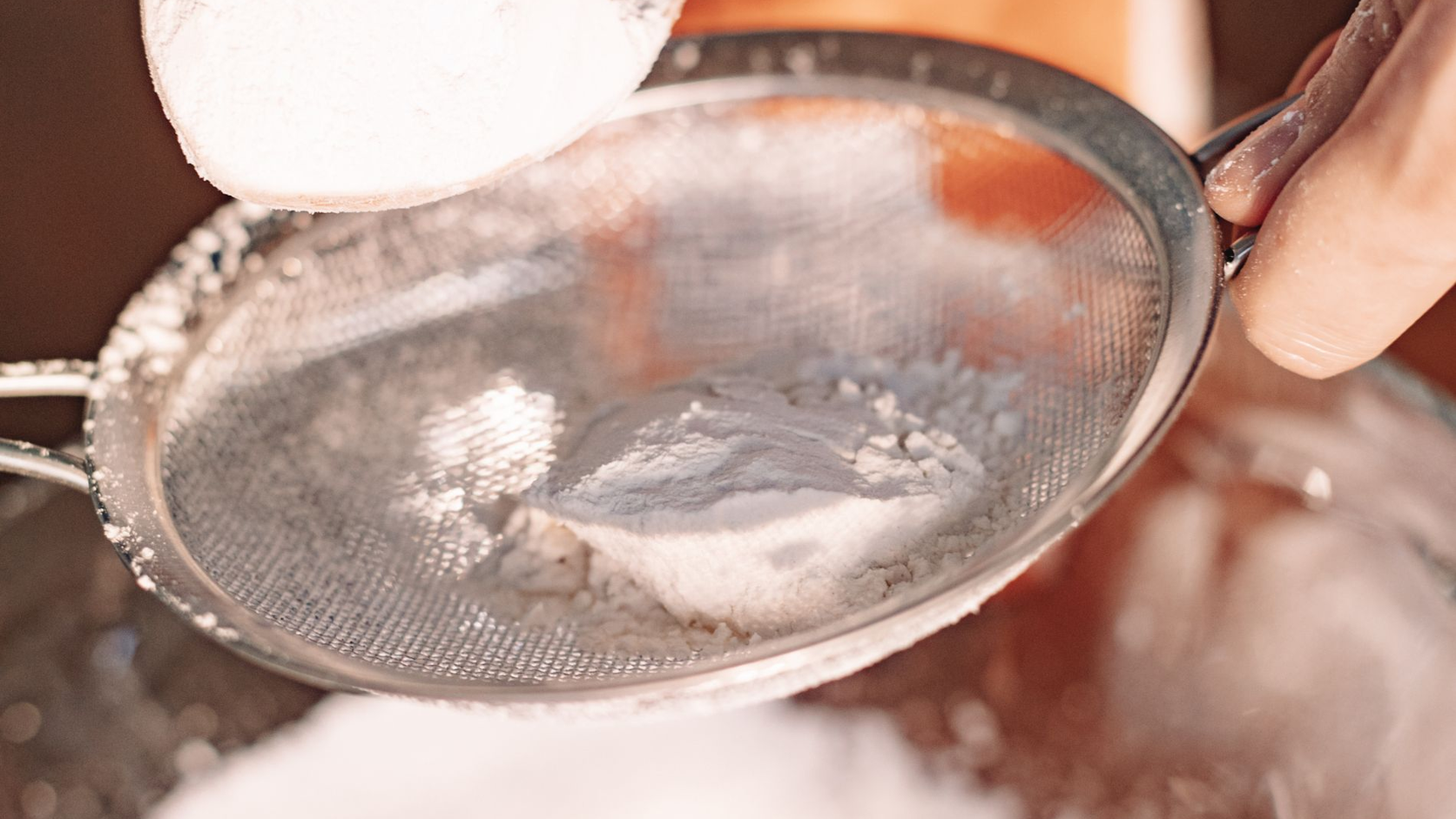
80 Mesh vs 200 Mesh Creatine Monohydrate: How Buyers Should Specify Particle Size
Mesh is a sieve shorthand, not a specification. How to make 80 and 200 mesh comparable, test dispersion at the intended dose, and write a particle-size limit into the RFQ.
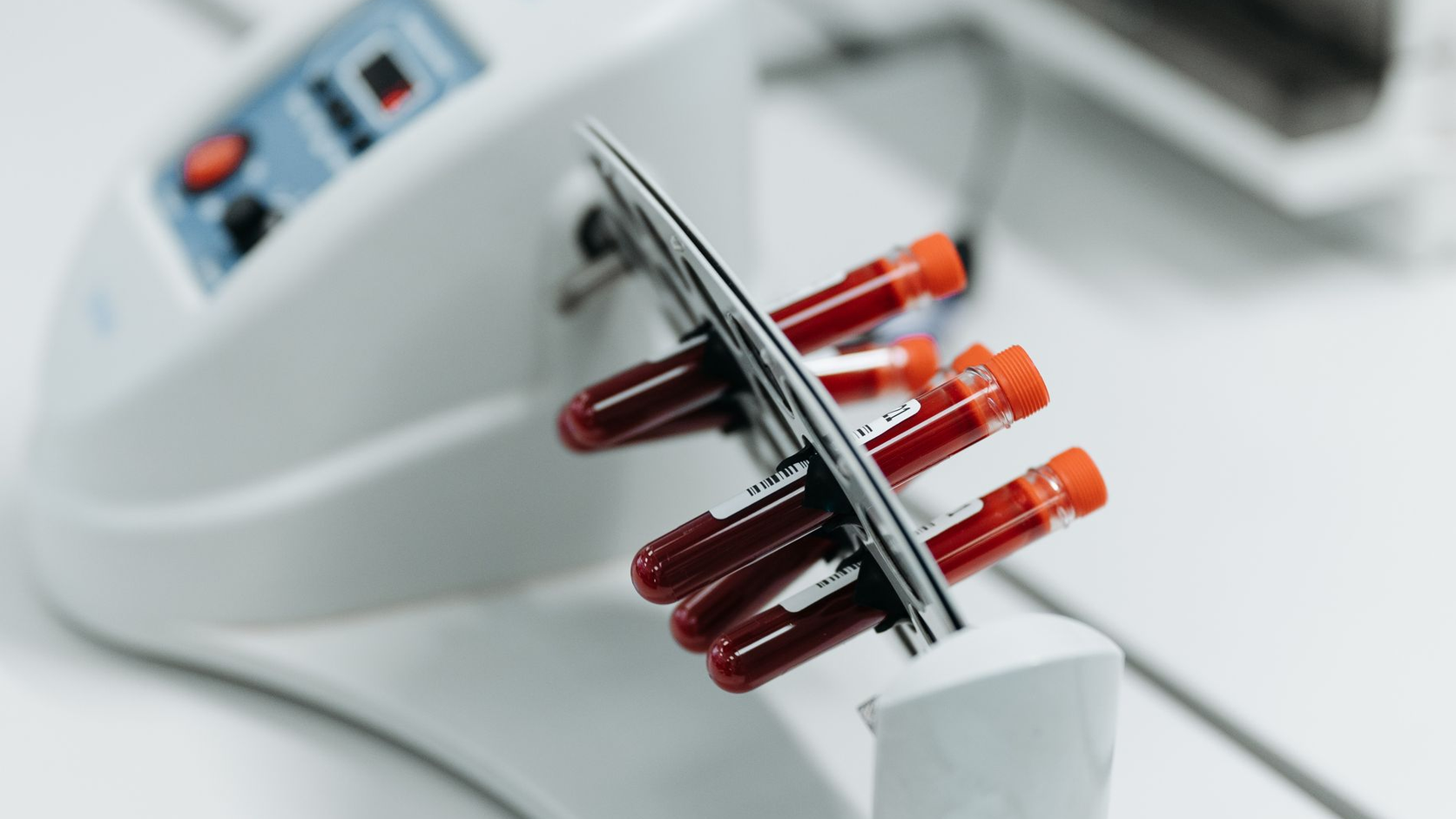
L-Carnitine L-Tartrate COA: How to Read a 99% Assay and a 68% L-Carnitine Result
A salt assay near 99% and an L-carnitine result near 68% can describe the same pure material. How to name the analyte, the basis and the method so a COA actually releases a lot.

L-Theanine COA Checklist for Ingredient Buyers
A 98% HPLC result is only the headline. How to tie the L-theanine COA to a lot, read the assay basis, and keep L-form evidence separate from a routine non-chiral assay.