Xanthan Gum 80 vs 200 Mesh: A Buyer’s Trial for Dispersion and Hydration
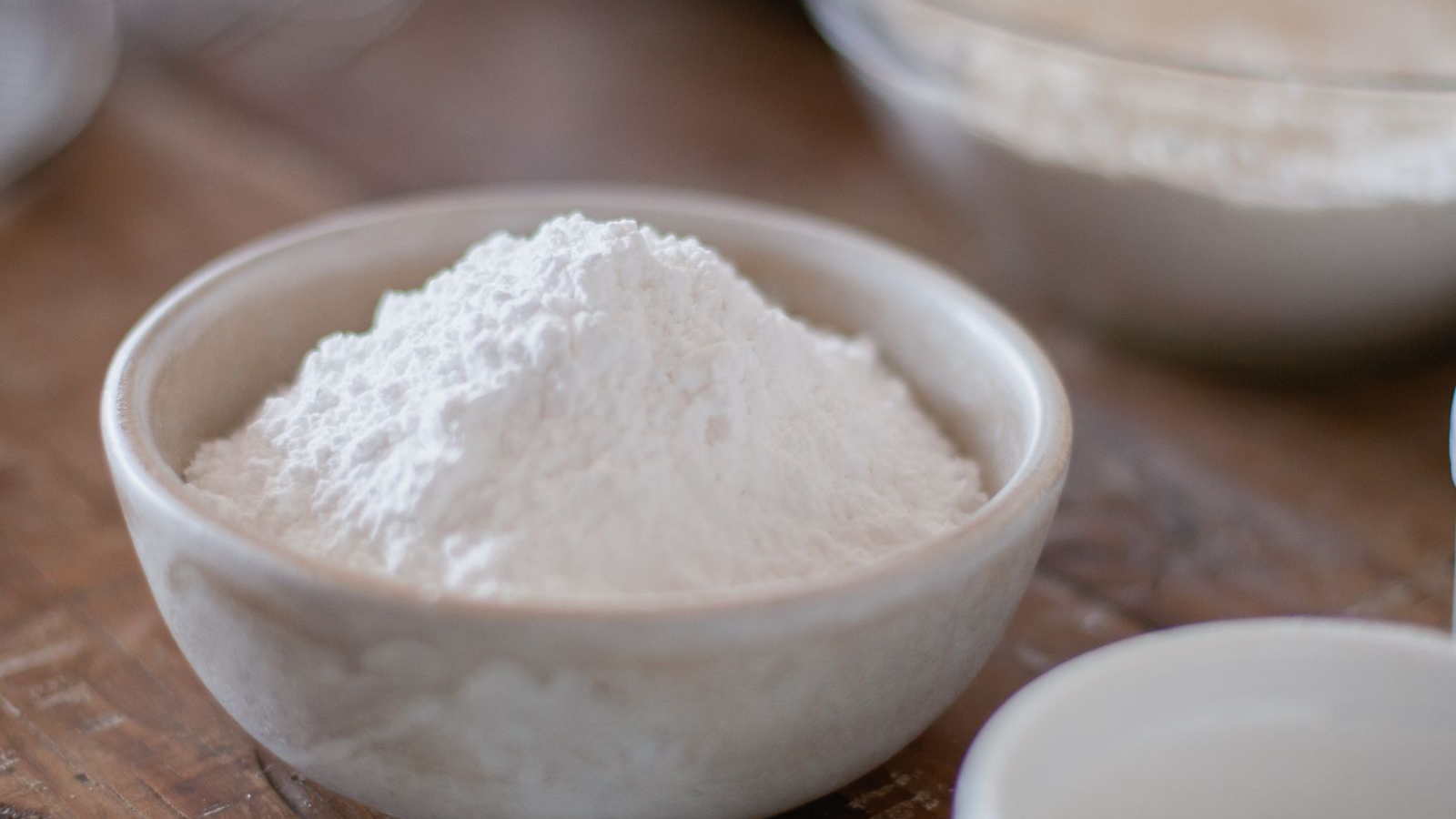
A quote that says “xanthan gum, 200 mesh” does not tell you whether that powder will disperse cleanly in your tank. A finer powder can hydrate quickly after its particles have separated; the same rapid surface hydration can create stubborn fish-eyes when particles hit water in clumps. A coarser grade may give a mixer more time to separate particles, but it can take longer to reach its required viscosity. The right choice depends on the way your process feeds, mixes and hydrates the gum.
For most food buyers, the useful comparison is not simply 80 mesh versus 200 mesh. Ask what sieve standard and passing percentage define each lot, then compare both grades in a controlled trial using your actual water, premix, addition rate, mixer and product formula. Keep chemical identity, food-grade documentation and viscosity specification as separate acceptance checks. Particle size is a process-fit attribute, not proof of purity or food compliance.
Quick Answer
A mesh number describes an opening in a test sieve, not the diameter of every particle, and the required passing percentage matters as much as the label. Finer powder usually disperses and hydrates faster but is also more prone to lumping if it is fed into still water. Compare both grades on the same sieve standard, the same tank geometry and the same hydration time, and write the qualifying test into the specification so a later lot is checked against the same question.
What “80 mesh” and “200 mesh” mean on a specification
A sieve designation describes an opening in a test screen; it does not mean every powder particle has exactly that diameter. Under the U.S. ASTM sieve series, No. 80 has a nominal opening of 180 micrometres and No. 200 an opening of 75 micrometres. The current ASTM E11 standard sets requirements for test sieve cloth and construction, including opening tolerances. Other sieve series or supplier shorthand may differ, so put the actual standard and opening in the purchase specification.[1][2]
The pass percentage matters as much as the label. One public food-grade product sheet describes 80-mesh xanthan as at least 95% passing a No. 80 screen. A 200-mesh sheet from another source says at least 92% passes a No. 200 screen. Those are two supplier specifications, not a universal rule for every 80- or 200-mesh grade. The percentages also refer to different apertures; “92% through 200 mesh” is not directly comparable with “95% through 80 mesh.”Commercial examples: Fufeng 80-mesh sheet and 200-mesh sheet.
Request the method behind the value: sieve standard, screen openings, sample mass, shaking time, and whether the reported result is percent passing, percent retained or a range. If the supplier reports laser-diffraction values such as D10, D50 and D90, ask for that method and the full distribution. Those values describe a different measurement from the fraction passing a specified test sieve. Do not place them side by side in a spreadsheet as if they were equivalent.
Why a finer powder can disperse worse
Buyers often use “dissolve,” “disperse” and “hydrate” as if they describe one event. They do not. Dispersion is the physical separation and distribution of dry particles through the liquid. Hydration is water entering the polymer and developing its functional properties. Dissolution or full hydration follows as the particle structure breaks down and viscosity develops. If a powder clumps before it disperses, the wet outer layer can slow water reaching the dry material inside.
A peer-reviewed review of xanthan grades describes the trade-off: finer granulation can hydrate faster but is more prone to lumping when it disperses poorly; coarser granulation hydrates more slowly but can be easier to distribute. The review focuses on agricultural uses, so its quantitative application examples should not be transferred to food products. The physical distinction is still useful as a hypothesis for a food-line trial, not a guarantee about any supplier’s grade.[3]
A separate Food Hydrocolloids study developed ways to measure rehydration in xanthan, alginate and guar. It treats wetting, swelling, dispersion and viscosity development as related but distinct behaviors. Its xanthan test material was a specific 200-mesh product; the paper did not establish a universal 80-versus-200-mesh performance ranking.[4] That limitation is exactly why a mesh label should narrow the test plan, not replace it.
Supplier webpages sometimes present a simple rule such as “200 mesh dissolves faster” or “80 mesh clumps less.” Recent cooking discussions and mixer demonstrations focus on clumping and feed technique; they signal a practical problem, not a universal mesh ranking. These claims can describe particular grades under particular handling conditions, but they are not enough to select a substitute without the supplier’s sieve specification and a process trial. In the trial, determine whether the bottleneck is powder feed and dispersion, time to full hydration, or final product performance.
Choose by your powder-to-liquid step
An 80-mesh grade is a sensible first candidate when operators feed powder directly into a moving liquid under moderate agitation and need a forgiving addition window. It may give the mixer more time to separate particles before viscosity rises. It still clumps if dumped too quickly, added outside the effective mixing zone or introduced into a system that hydrates the outside of a cluster before the centre wets.
A 200-mesh grade is worth testing when your equipment can distribute fine powder quickly, when a controlled dry premix or compatible predispersion is already part of the formula, or when a finer physical grade is needed for downstream handling. It can build viscosity rapidly once it is dispersed, which may be useful in a process designed for that sequence. If powder is poured into a low-shear tank in one heap, finer particles may make lumping harder to correct, not easier.
A dry-blend or easily dispersible/agglomerated product is a third option when neither conventional mesh grade works with the existing feed system. Do not assume that “agglomerated,” “instant” or “easy disperse” means the same thing across suppliers. Ask what processing changes were made, what method supports the claim, and whether its viscosity and food-grade specification remain suitable for your application.
| Process condition | First grade to trial | Why | What can overturn the choice |
|---|---|---|---|
| Direct addition to water; moderate agitation | 80 mesh | Slower hydration may leave more time to distribute the powder | Actual feed zone, water flow and operator addition rate |
| Strong powder induction or well-controlled premix; fast viscosity build desired | 200 mesh | Fine powder can hydrate quickly after even dispersion | Poor feed control can create hydrated lumps |
| Dry instant blend needing rapid reconstitution | 200 mesh or a dispersible grade | Fine or engineered particles can support faster hydration in the right blend | Premix segregation, salt/sugar level and consumer mixing conditions |
| Low-shear tank; recurring fish-eyes | Test feed method or dispersible format first | Mesh alone may not fix a distribution problem | Supplier-specific particle structure and formula compatibility |
| Clear liquid or tight filter step | Compare both against the final appearance and screen | Particle size can affect undispersed residue, but clarity is not defined by mesh alone | Grade color, hydration, other ingredients and filtration conditions |
Treat this table as a trial starting point, not a grade standard. A product’s water clarity, viscosity, microbiology and particle-size distribution are separate attributes. A seller should not use a “200 mesh” label as evidence that the finished beverage will be clearer or that the material meets your release specification.
Sourcing candidate for buyer review
Two Alibaba listings reviewed for this article are linked below as inquiry starting points: a food-grade 80-mesh offer from Hangzhou Focus Corp and a 200-mesh Fufeng-brand offer from Hangzhou Yeastar Biotech. They are not ranked, and neither listing confirms dispersion behaviour in your own mixing equipment.
A paired trial that can survive a supplier change
Run an A/B comparison with the incumbent and candidate lot. Keep the recipe and process fixed so you can tell whether the mesh change helped. If you need to optimize a new grade’s feed method, run that as a second phase; changing both the ingredient and mixing method in the same comparison makes the result hard to interpret. Lock the sample identity. Record manufacturer or supplier, exact SKU, lot number, stated grade, packaging and date received. Confirm whether a sample and its COA map to the same grade and lot planned for a commercial order.
Check the particle-size claim. Ask for the sieve method and batch result, not only “80 mesh” or “200 mesh.” If possible, retain an unopened sample from each lot for later comparison. Do not use a visually finer appearance as a substitute for a measured distribution. Hold processing conditions constant. Fix batch size, water source, liquid temperature, xanthan dose, order of addition, mixer, speed, mixing time and any sugar or salt preblend. Feed powder at a recorded rate into the same mixing zone. Repeat the preparation at least enough times to see whether the result is reproducible.
Measure dispersion before judging viscosity. Record time to uniform appearance, number and size of visible fish-eyes under a defined inspection method, residue on the same screen if relevant, and whether filters or transfer lines show blockage. Set acceptance limits from your process; do not invent a universal fish-eye count.
Measure hydration and the finished target separately. At a fixed time and temperature, measure viscosity using the same instrument geometry and method for both samples. Then evaluate the final product’s pour, cling, suspension, texture or appearance at the actual use concentration. A quick slurry result does not replace a formula trial.
Confirm the plant-scale change. A bench beaker may not reproduce powder induction, vortex depth, tank geometry or shear at production scale. Before changing the purchase specification, test a representative batch on the intended line and record the conditions that made the result pass. A study on food hydrocolloid rehydration supports this separation of endpoints: it measures swelling, dispersion and viscosity development rather than treating a single “dissolve time” as the whole story.[4] The practical goal is a repeatable process window, not a supplier’s fastest demo under an unknown mixer setup.
What to put in the RFQ and COA review
Send the same request to each supplier:
“Quote food-grade xanthan gum for our stated food application. Identify the manufacturer, exact grade/SKU and product source. For the particle-size result, state the sieve series/standard, nominal openings, method, sample mass, test time and lot-specific percent passing/retained. Provide the current specification and a lot COA with actual results. Separately state the viscosity method, test solution, temperature and acceptance limits. Confirm sample-to-commercial-lot traceability, bag/liner details, MOQ, sample availability, destination-market food documentation and change-notification practice.”
Review identity and food documentation independently from mesh. Confirm the applicable standard and destination-market requirements for your product category. Ask whether the seller is the manufacturer, distributor or repacker and which entity issues the COA. If documents use different product codes or show a different particle size from the listing, pause the comparison and resolve the discrepancy in writing.
For repeat purchases, write the accepted particle-size method into the incoming specification. Set a sieve pass range or another validated distribution limit that matches the process, keep the approved sample where storage allows, and trend actual lot results. If you qualify an 80-mesh grade then receive a 200-mesh substitution, do not treat it as an equivalent just because the viscosity minimum is unchanged. Re-run the dispersion and finished-formula comparison.
Alibaba results reviewed 24 October 2026 showed two leads: Hangzhou Focus Corp’s food-grade 80-mesh listing (14 years on Alibaba, 4.8/5 from 17 reviews, 1 kg minimum) and Hangzhou Yeastar Biotech’s 200-mesh Fufeng listing (10 years, 4.9/5 from 8 reviews, 25 kg minimum). Tenure, reviews and MOQ are dynamic marketplace fields; they do not verify origin, compliance, sieve results or repeat-lot quality. The first listing may suit a small trial; the second identifies a 200-mesh grade more clearly.
The purchasing decision
Choose the mesh grade that gives your plant a wider, more repeatable window from powder feed through full hydration. Start with 80 mesh when direct addition and moderate agitation make dispersion the constraint; test 200 mesh when your process can separate fine particles and benefits from quicker hydration. If both are inconsistent, look at feed equipment or a dispersible format before simply increasing xanthan dose.
Approve the exact product code and particle-size method, then preserve the lot-to-formula trial as your repeat-purchase baseline. “80” and “200” are useful screening labels; the sieve result and your production trial are the evidence that should govern the next order.
References
- ASTM International. ASTM E11-24, Standard Specification for Woven Wire Test Sieve Cloth and Test Sieves. https://store.astm.org/standards/e11. Accessed 24 October 2026.
- Canadian Food Inspection Agency. Fish Products Standards and Methods Manual, Chapter 14, Appendix E: Sieve Size Designations (archived manual). https://epe.lac-bac.gc.ca/100/206/301/cfia-acia/2011-09-21/inspection.gc.ca/english/fssa/fispoi/man/fpimip/chap14e.shtml. Accessed 24 October 2026.
- Berninger T, González López Ó, Gundula Bejarano A, Preininger C. Water-soluble polymers in agriculture: xanthan gum as eco-friendly alternative to synthetics. Microbial Biotechnology. 2021;14(5):1881–1896. doi:10.1111/1751-7915.13867.
- Wangler J, Kohlus R. Development and validation of methods to characterize rehydration behavior of food hydrocolloids. Food Hydrocolloids. 2018;82:500–509. doi:10.1016/j.foodhyd.2018.04.018.
Related content
Continue exploring related ingredient research and sourcing guides.

Xanthan Gum Viscosity Specs: What 600, 1200 and 1800 cP Tell Buyers
A cP number is only comparable when the test conditions match. How to read xanthan gum viscosity claims, standardise the method across suppliers, and write an RFQ that prevents false comparisons.

Creatine Monohydrate 200 Mesh vs Micronized: What Buyers Should Verify
A 200-mesh claim and the word micronized are both shorthand. What each one can and cannot tell you, when sieve analysis is enough, and how to write a particle-size limit that a lot has to meet.

80 Mesh vs 200 Mesh Creatine Monohydrate: How Buyers Should Specify Particle Size
Mesh is a sieve shorthand, not a specification. How to make 80 and 200 mesh comparable, test dispersion at the intended dose, and write a particle-size limit into the RFQ.

L-Carnitine L-Tartrate COA: How to Read a 99% Assay and a 68% L-Carnitine Result
A salt assay near 99% and an L-carnitine result near 68% can describe the same pure material. How to name the analyte, the basis and the method so a COA actually releases a lot.