Clarified vs Nonclarified Gellan Gum for Clear Drinks: What Transmittance Cannot Tell You
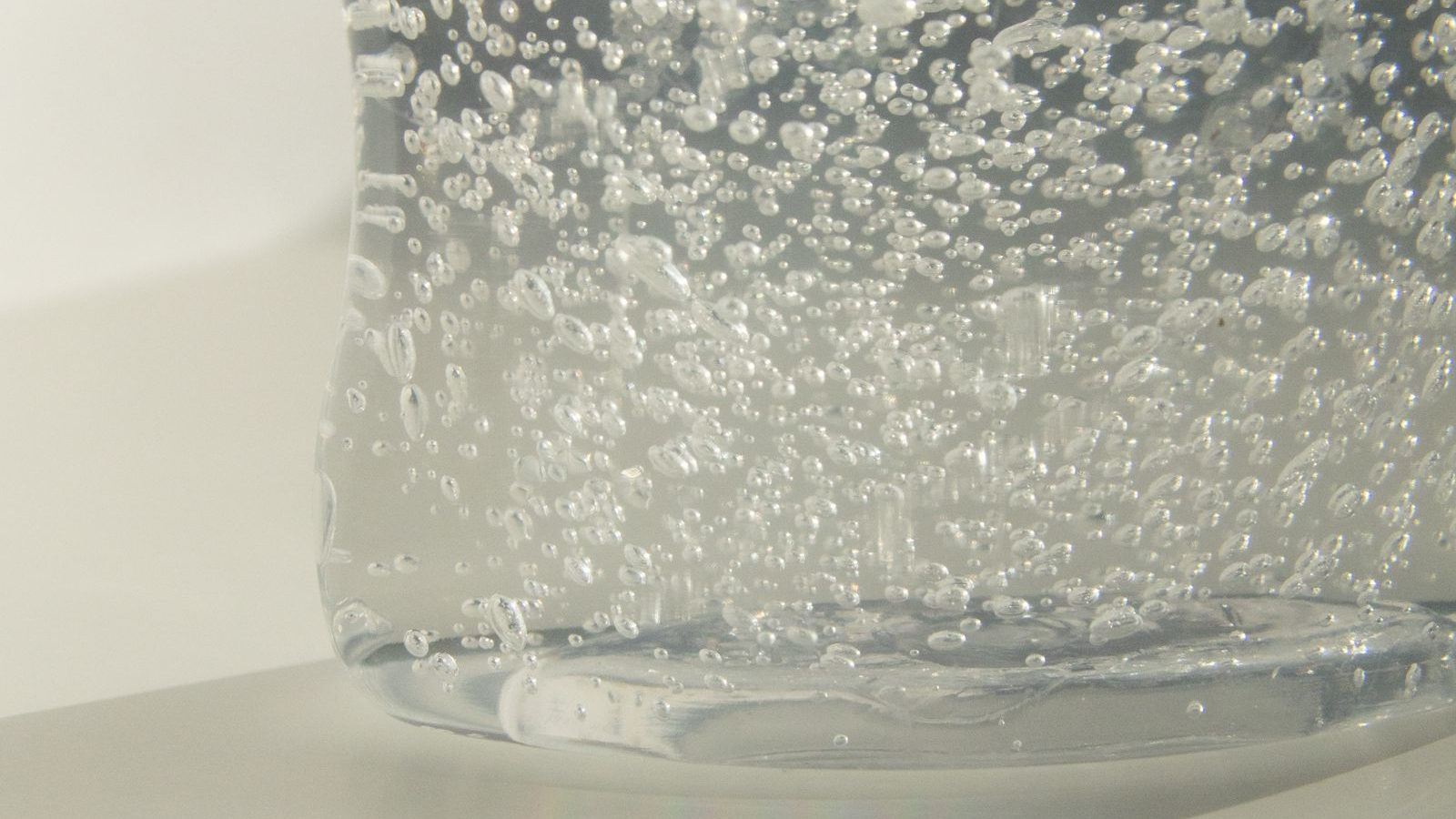
A clear beverage can turn faintly hazy after a gellan gum change even when the replacement passes its food-grade specification. The label may say “low acyl,” and the certificate may report an attractive transmittance value. Neither establishes that the new powder went through a clarification step, nor that the finished drink will look the same after minerals, acid, heat and cooling.
For a buyer sourcing a transparent drink, begin with two separate questions: is the offered gellan actually a clarified grade with a traceable method for its optical result, and does the complete drink meet an agreed visual target? A supplier's clear gel is useful screening evidence. The bottled product is the release test. This guide deals with that optical selection and comparison; an existing article on pulp settlement addresses suspension performance separately.
Quick Answer
Clarified describes the manufacturing route and the haze a grade contributes; low acyl describes the acyl substitution on the molecule. They are not interchangeable. A transmittance percentage is only comparable when the wavelength, path length, concentration, hydration and measurement temperature are the same, and even a matching number does not predict mouthfeel, gel strength or shelf stability. Diagnose the haze in the finished drink before buying a new grade, then put the exact grade code, clarification status and optical method into the RFQ.
Low acyl and clarified describe different things
Low acyl describes how much of the native gellan's acyl substitution remains. Clarified describes additional processing intended to remove insoluble material. They are not interchangeable grade names. EFSA's re-evaluation of E418 states that low-acyl material is sold in both clarified and nonclarified forms. It describes clarified gellan as produced through filtration to remove cell residues and other insoluble components.[1] An academic fluid-gel paper likewise notes that clarity is not an inherent property of low-acyl gellan; it reflects an additional clarification process.[2]
That distinction matters when two listings both say “low-acyl food-grade gellan gum.” One may be appropriate for a clear drink and another for an opaque dessert or a process that tolerates haze. The wording on a marketplace card rarely identifies the exact manufacturing code, filtration route or lot-specific optical method. Ask the seller to identify the manufacturer, grade code and whether the material is clarified. If it is a blend, obtain its full stabilizer identity and do not interpret its optical result as if it belonged to neat gellan alone.
EFSA also discusses polyhydroxybutyrate, or PHB, as a possible component arising from the manufacturing process. Industry information supplied to the panel described a wide range depending on deacylation and clarification; EFSA considered clarification a feasible way to reduce PHB.[1] Do not convert those historical industry ranges into a guaranteed PHB level for an offer. Nor should every cloudy drink be diagnosed as PHB contamination. Other insoluble matter, process defects and the beverage's own ingredients may be responsible. Request the relevant grade-specific composition or clarification statement if that attribute determines acceptance.
Food-additive compliance still needs its own review. E418 identity and purity requirements answer a regulatory question. “Clarified” answers a manufacturing and functional-selection question. A passing E418 COA cannot automatically establish a clear-bottle appearance; conversely, an attractive bottle photograph cannot replace mandatory compliance and lot traceability. Keep the two records linked but separate.
A transmittance percentage needs its method
Light transmission is sensitive to how the sample is prepared and measured. A reported percentage has no stable purchasing meaning without at least the specimen concentration, whether it was a hot solution or set gel, heating and cooling schedule, salt composition, optical wavelength, cuvette path length, blank and reading temperature. Ask for the actual method and lot result. Compare equivalent methods across suppliers or retest both samples in one laboratory under an agreed procedure.
EFSA reproduced an industry proposal that included a transmittance criterion for some clarified low-acyl variants, measured on a 0.5% solution. The proposal appeared in a table of suggested specification changes, not as a universal guarantee for every E418 product or finished beverage.[1] Treat an online “80%” or “90%” headline as a claim tied to its method, not as a free-standing quality grade. The commercial label “99% purity” cannot substitute for a defined optical test either.
In a controlled study, Evageliou measured the clarity of 0.5 wt% low-acyl gellan gels by absorbance at 490 nm while varying potassium or calcium salts and sugars. Calcium-containing gels were more turbid than potassium-containing gels in that experiment; clarity also shifted with salt concentration and sugar composition.[3] Those were model gels, not production drinks. Their value for a buyer is to show that a laboratory optical result belongs to a defined matrix. It cannot be carried unchanged into mineral water, juice or a vitamin drink.
Transmittance and turbidity are related optical observations but should not be treated as interchangeable numbers. Wavelength, path length and sample geometry affect the reported result, and an instrument may be particularly sensitive to the particles present in its chosen measurement range. Color can complicate visible-light readings. Compare a colored beverage with a matrix-matched blank and a calibrated method; do not assume a clearer-looking bottle must have a higher numerical transmission under another lab's procedure.
Set a practical brief before asking for a number. Is the product meant to be water-clear, lightly opalescent or deliberately cloudy? Will it contain visibly suspended fruit pieces? What bottle material and fill volume will be used? A long light path through a clear bottle can reveal a haze that is not obvious in a thin laboratory cuvette. Record acceptable appearance under defined lighting, alongside a quantitative measurement where it adds repeatability. Neither measurement should be improvised after the supplier's sample arrives.
If a supplier sends two impressive percentages, check whether both describe the same sample state. Transmission of a hot polymer solution, a cooled calcium gel and a beverage after processing answer three different questions. A sample can be filtered before the laboratory reading, leaving the buyer unaware of material that the factory cannot remove without changing its process. Ask how a test portion was prepared and whether it was filtered or centrifuged. Request the raw lot result as well as the specification limit; a “passes” stamp does not show drift toward a visual threshold. Set an internal control sample alongside every laboratory run to distinguish instrument variation from a real change of gum.
Diagnose the haze before buying a new grade
Start with the beverage without gellan. Measure or photograph it in the same container and lighting used for the complaint. Then prepare gum in controlled water using the supplier's method and compare it with the approved grade. Finally test each gum in the actual formula under identical processing. These three preparations help separate background haze, raw-material-related haze and an interaction that appears only in the full drink.
Look at when cloudiness first appears. Immediate particles after powder addition suggest poor dispersion or incomplete hydration. Haze developing after the mineral blend points toward ion-dependent structure or precipitation. Cloudiness that follows acidification may involve changes in the gellan network, other beverage components or their interaction. A change seen only after heat treatment and cooling demands a process-matched comparison. Sampling at those transition points is more informative than testing one bottle at the end.
Avoid assigning every visible particle to gellan. Check the water, sweetener, flavor emulsion, juice concentrate, proteins, minerals and packaging-related deposits. A haze that remains in a no-gellan control cannot be solved by paying for a clearer gum. If filtering a test sample removes the haze, inspect what the filter collected before choosing a remedy; indiscriminate fine filtration may also remove the particles the product is designed to show. Keep all samples traceable and do not return diagnostic samples to the line.
The literature argues against a simple rule that lower acyl content is always clearer in a useful beverage. In a carrot-juice study, low-acyl gellan gave lower turbidity but did not stabilize that particular juice as well as the high-acyl treatment studied.[4] This finding does not select a universal carrot-juice grade. It illustrates a tradeoff: optical clarity, particle stability and mouthfeel must be evaluated together. A crystal-clear liquid with hard sediment or brittle gel fragments has not met a transparent suspended-drink brief.
Another study found that sugar type and cooling conditions altered the clarity and texture of calcium- or sodium-crosslinked gellan gels.[5] Its gel recipes were not finished commercial beverages, but they show why a changed cooling profile or solids level may shift appearance without any change in the powder. Record the formula's soluble solids, pH, water mineral profile, addition order and thermal path before interpreting a side-by-side gum trial.
Sourcing candidate for buyer review
Two Alibaba inquiry routes illustrate why the RFQ must carry the missing technical questions. The E418 offer is a general gellan listing that does not independently establish a low-acyl clarified grade, and the low-acyl offer shows the same acyl form under a different supply route; confirm the exact grade code and processing status with the seller in writing before relying on either.
Build a comparison that survives procurement
For an approved product with a retained reference lot, compare at least the current gum and a candidate under one written protocol. Weigh on the same basis and hold the final beverage composition constant. Use the same water batch, mineral and acid additions, dispersion method, heat history, cooling route and package. Prepare independent replicates and randomize sample labels where practical. The first screen can reject a poor candidate; a stable commercial specification requires repeated lots and production-scale confirmation.
Measure the supplier's defined optical test if you want to verify its certificate. Measure the finished beverage with a separate method tied to your product target. Photograph the bottles before shaking at a fixed age and temperature; inspect haze, discrete specks, rings and sediment against the same background. Then use a standard inversion or pour test to assess whether any intended inclusions redisperse and whether the texture remains drinkable. State which observation is a pass, a hold or a request for investigation before opening the blind codes.
Use timing that reflects the product. A freshly filled drink may look clear but become opalescent after refrigeration or warm storage. A short accelerated screen can rank candidates, while a properly designed shelf-life program is needed for claims across the intended distribution period. Include normal variation in water source and mineral premix when those inputs are known to move. An approved result from one exceptionally soft-water bench batch should not silently become the production standard.
There is also a basic allocation of responsibility. The ingredient supplier can certify a raw-material method and supply representative samples; the beverage maker controls water, other ingredients, process, packaging and the shelf target. Where an opaque flavor emulsion is unavoidable, no clarified gellan can make the whole product water-clear. If a supplier's trial uses a different acid or an unfortified water base, ask for the recipe and process before treating its photograph as a prediction. Keep the decision record with both laboratory and plant conditions so a future operator knows which part of the result can actually be repeated.
Do not let a high transmission number hide specks. A bulk optical average can miss occasional floating gel fragments that a consumer sees immediately. Conversely, deliberate fruit inclusions complicate an instrument reading and need a visual brief that distinguishes desirable pieces from unwanted fine haze. For a clear liquid carrying inclusions, it may be sensible to measure the clear continuous phase separately while documenting the intact drink's appearance. Write down the separation method; otherwise the result cannot be reproduced.
What to ask the supplier and what to put in the RFQ
Send the intended appearance, ingredients, pH, soluble solids, water mineral range, heat and cooling conditions, package and target shelf period. Request the exact low-acyl grade code, clarified or nonclarified status, current specification, lot-specific COA, optical method and representative sample. Ask whether the certificate's specimen is a solution or a set gel, which ions are added, and whether the published result is a minimum or typical observation. Seek recent lot data if your bottle appearance is sensitive to small changes.
If the supplier offers a higher-clarity variant, ask what changed in manufacture and whether its functional behavior differs from the incumbent. More filtration or lower insoluble material does not certify equal gel strength, hydration or stability in the finished formula. Establish sample-to-order continuity: manufacturer, site, code, lot and pack information should agree across quotation, sample label, COA and shipment. Document substitution and change-notification expectations before routine repeat orders.
The purchase decision is therefore narrower than “which gum is clearer?” Buy the exact grade whose identity, clarification status and test method are documented, and whose finished beverage meets the agreed appearance, suspension and texture limits under your process. Record that grade and its approved baseline so the next delivery can be checked against the same question.
References
- EFSA ANS Panel. Re-evaluation of gellan gum (E 418) as a food additive. EFSA Journal. 2018;16(6):5296. https://doi.org/10.2903/j.efsa.2018.5296
- Bradbeer JF, Hancocks R, Spyropoulos F, Norton IT. Low acyl gellan gum fluid gel formation and their subsequent response with acid to impact on satiety. Food Hydrocolloids. 2015;43:501–509. https://doi.org/10.1016/j.foodhyd.2014.07.006
- Evageliou V. Effect of salts and sugars on the clarity of gellan gels. International Journal of Food Science and Technology. 2011;46(5):1001–1006. https://doi.org/10.1111/j.1365-2621.2011.02575.x
- Sherafati M, Kalbasi-Ashtari A, Mousavi SMA. Effects of Low and High Acyl Gellan Gums on Engineering Properties of Carrot Juice. Journal of Food Process Engineering. 2013;36:418–427. https://doi.org/10.1111/j.1745-4530.2012.00682.x
- Gelling temperature, gel clarity and texture of gellan gels containing fructose or sucrose. Carbohydrate Polymers. 2001;44(3):197–209. https://doi.org/10.1016/S0144-8617(00)00220-4
Related content
Continue exploring related ingredient research and sourcing guides.
Gellan Gum Fish Eyes in Beverages: How to Fix Dispersion Before Changing the Grade
Undissolved gellan specks, weak suspension and gritty deposits usually come from dispersion, hydration, ion or cooling problems rather than the grade itself. A step-by-step diagnosis and a paired trial that separates the two.
A Passing Gellan Gum COA Is Not a Beverage Release Test
A replacement gellan gum lot can meet its certificate of analysis and still fail in the drink. How to separate identity and purity from functional performance, build a reference beverage and set real stop points.
Why Is Gellan Gum Not Keeping Pulp Suspended? Six Checks Before Raising the Dose
When pulp settles in a juice drink, the fix is usually not a higher gum dose. Six checks that separate particle settling, serum separation, poor hydration and ion effects before you change the formula.

Creatine Monohydrate 200 Mesh vs Micronized: What Buyers Should Verify
A 200-mesh claim and the word micronized are both shorthand. What each one can and cannot tell you, when sieve analysis is enough, and how to write a particle-size limit that a lot has to meet.