L-Theanine Powder vs Granules: How to Compare Active Content and Cost
Disclosure: We may earn a commission if you purchase through links on this page, at no additional cost to you.
Quick Answer
Price per kilogram does not compare L-theanine powder with granules until both offers are normalised on active content. A 98% powder supplies roughly 980 g of L-theanine per kilogram; a 40% granule supplies roughly 400 g, and the remaining 60% is a carrier or other declared material that has to be identified before the material enters a formula.
Compare delivered cost per kilogram of active L-theanine, then choose the format on what it changes in your process: dust and flow at the feeder, blend uniformity, and the active load the formula can carry. Request the carrier, the assay basis and the lot result for whichever format you shortlist.
The format choice starts with the amount of L-theanine you need
A quote for 98% L-theanine powder and a quote for 40% L-theanine granules are not directly comparable by price per kilogram. The first supplies about 980 g of L-theanine per kilogram if the stated assay is a weight fraction; the second supplies about 400 g. To deliver the same amount of active ingredient, the 40% material requires roughly 2.45 times as much ingredient mass as the 98% powder. That difference affects cost, batch size, excipient load and label calculations.
The lower assay does not automatically make a granule inferior, and the higher assay does not automatically make a powder easier to use. They are different purchase formats. The granule may be a carrier-based preparation or a physically granulated product; the word alone does not tell the buyer which. The powder may be easier to price per active gram but harder to meter in a low-dose premix. Before comparing offers, ask what else is in the material, how the assay is calculated, and what your process is expected to do with it.
What does 40% or 98% actually describe
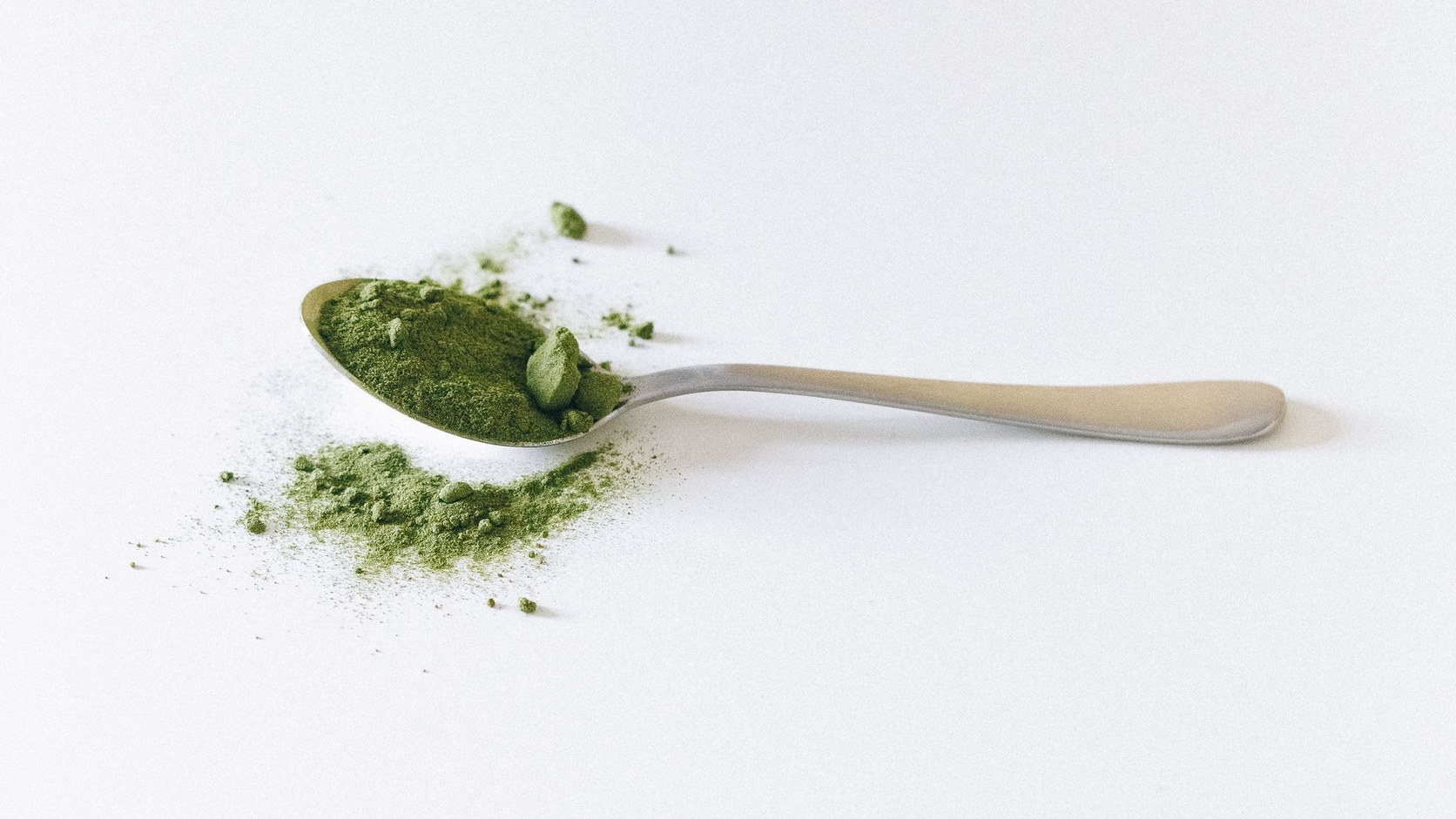
L-theanine is a defined compound with the formula C7H14N2O3, molecular weight 174.20 and CAS 3081-61-6. The USP Food Chemicals Codex entry describes L-theanine as a white, odorless crystalline powder and notes that the compound is water soluble. A 40% granule is therefore a commercial preparation containing a stated fraction of L-theanine, rather than a new chemical identity. Its remaining mass must be explained by the supplier. [1]
A percentage on a product page can be a specification, an assay result, or merely a marketing claim. Ask whether “40%” or “98%” is a minimum limit, a typical value, or a single batch result. Ask for the method, reporting basis and actual test result. A dried-basis assay is not identical to an as-is value. For granules, ask whether the percentage is weight-for-weight L-theanine in the finished granule and whether the denominator includes carrier, binder, moisture or other processing aids.
A low assay may be intentional when an ingredient is diluted to improve handling or to make premixing easier, but this must be demonstrated for the buyer’s own line.
Normalize the quotes on active L-theanine
Use the supplier’s stated assay only after confirming that it is a mass percentage for the delivered material. The basic calculation is: price per kilogram of ingredient divided by the assay fraction equals price per kilogram of L-theanine equivalent. For a price of $40/kg at 98%, the arithmetic is $40 ÷ 0.98, or about $40.82 per kilogram of L-theanine. At the same $40/kg and 40%, it is $100 per kilogram of L-theanine. These are example calculations, not current market prices.
For a target of 100 g L-theanine in a batch, the theoretical input is about 102.0 g of a 98% powder or 250 g of a 40% granule. The 40% option adds about 148 g more material before accounting for process loss. If the granule contains a carrier, that carrier becomes part of the formula and may change solids, sweetness, water demand, flow, dissolution or other ingredients’ percentages. A buyer can use the formula below in a quote sheet: active cost/kg = landed ingredient cost/kg ÷ assay fraction. Landed cost should include the relevant freight, duty, testing and repacking costs for the actual purchase size.
The missing 60% is a specification question, not a rounding detail
For a 40% granule, request the full quantitative composition or a controlled specification that identifies the carrier and its permitted range. Ask whether it contains maltodextrin, a starch, another carbohydrate, a processing aid or a blend of materials. Do not infer a carrier from color, granule shape or a supplier’s general description. The identity and grade of the carrier can matter for allergen control, dietary restrictions, label declarations, moisture uptake and compatibility with a premix.
Request the manufacturing description at a useful level: is the granule formed by agglomeration of the same ingredient, or is L-theanine dispersed on a carrier? The supplier may protect proprietary process details, but it should still provide enough composition and quality information for the buyer to assess intended use. If the carrier is confidential, ask for its regulatory and allergen status, maximum proportion and any buyer-relevant limits under a confidentiality agreement.
For an 98% powder, the question changes. The approximately 2% balance can include water and minor impurities within the specification; it should not be treated as a declared carrier unless documentation says so.
Will granules improve feeding on your line
Granulation is often offered as a handling feature, but “granule” is not a performance guarantee. A product page may not report bulk density, particle-size distribution, flow function, angle of repose, dustiness or segregation behavior. Even when some data are available, results from a supplier’s test setup may not predict performance in a buyer’s hopper, feeder or blender.
Test the exact process problem you are trying to solve. If the problem is low-dose feeding, measure repeatability across several weigh or feeder cycles at the intended setpoint. If the concern is dust, observe material transfer under the same ventilation and handling conditions used in production. If it is blend uniformity, sample from multiple positions after mixing and test the distribution of L-theanine using a suitable method. A visual check that the blend “looks uniform” is not a substitute for a validated sampling plan.
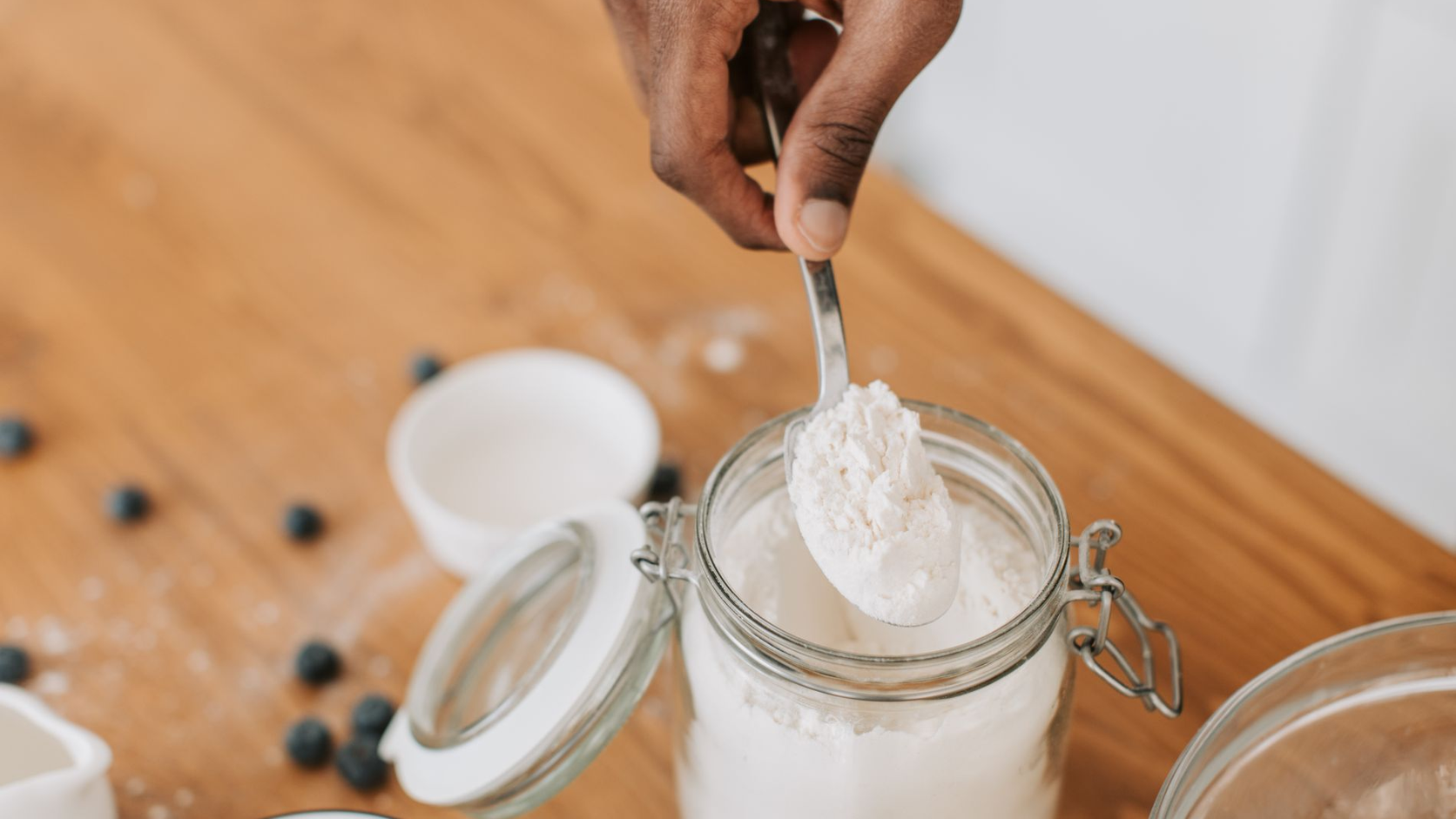
Compare powder and granules using identical equipment, batch size, target dose and operator steps. Record start-up loss, residue left in the equipment, time to discharge and cleaning burden. Do not scale an improvement from a bench cup directly to production without a pilot.
Check the dissolution and blend sequence, not just the ingredient form
The FCC describes L-theanine as water soluble and capable of forming a transparent, colorless solution. That describes the compound; it does not prove that every commercial granule dissolves at the same speed or leaves the same clarity. A carrier, binder, particle size, agglomeration method, water temperature, mixing rate and addition sequence can all affect how a finished preparation behaves. Request the supplier’s test conditions if it quotes a dissolution time.
For a beverage, test the material at the intended concentration, pH, temperature and order of addition. Note whether the test uses hard or purified water, and whether the ingredient is added to water or to a concentrated premix. Record visible particles, foam, settling and time to clear under a defined mixing protocol. If a formula is acidic or contains other dissolved solids, test that actual matrix rather than relying on a beaker of water.
For a dry blend, check whether particle-size differences create segregation during transfer and packaging. A granule can be larger than surrounding powders and still separate during vibration; a fine powder can also segregate because of cohesion or density differences.
Set the COA requirements before asking for samples
Ask for a current specification and a representative COA before sample approval. The COA should state product name, batch number, test result, specification limit, unit, method, test date and release authorization. For an L-theanine material, confirm identity, assay, loss on drying or water, appearance and any required impurity, residual-solvent, microbiological or elemental limits for your application and market.
A COA that says “L-theanine 98% HPLC” leaves questions: is the result a mass assay or normalized chromatographic area, what standard was used, and is the basis as-is or dried? For a 40% granule, the report should say whether the assay is on the finished preparation and how the carrier is included in the denominator. If the supplier provides a COA only for the active ingredient before granulation, it does not establish the finished granule’s active fraction.
The USP-FCC monograph gives an authoritative identity and description reference. Taiwan FDA’s food-additive specification is one jurisdiction-specific example that sets assay on a dried basis and includes tests such as specific rotation and loss on drying. Those specifications should not be copied as universal acceptance limits. [6]
A sourcing candidate for a first powder quote
The linked Alibaba offer is a candidate for requesting a quote on L-theanine powder. The listing result describes a food-grade powder, identifies CAS 3081-61-6, states HPLC testing and a 1 kg minimum order; the public page also identifies Xi’an Demeter Biotech Co., Ltd. and displays five years on Alibaba. These are seller- and page-stated facts, not independent verification of identity, stock, grade or quality. The listing does not provide the complete controlled batch documentation needed for production approval.
Ask whether the seller can provide a lot-specific COA, current specification, exact assay basis, full manufacturing route and sample from the same commercial grade. Confirm that the offer is the same material discussed in the quote and that price, MOQ and shipping terms have not changed. Do not treat “food grade” or the visible HPLC label as proof that the batch meets your own release requirements.
When origin matters, verify it separately from purity
L-theanine occurs naturally in tea, and commercial material may be extracted, synthesized or made through a fermentation or enzymatic route. These routes are not interchangeable regulatory claims. FDA’s GRAS inventory contains separate notices for L-theanine extracted from tea leaves, chemically synthesized L-theanine and a more recent fermentation-produced ingredient. A notice applies to the notified substance and intended uses described in that record; it does not automatically approve every supplier’s product or every use. [2–5]
If green-tea origin is a sourcing requirement, a 98% HPLC result alone does not prove botanical origin. Ask for a traceability statement, source and process declaration, and any analytical evidence the supplier relies on. Published analytical research has examined stable isotope ratios to distinguish tea-derived from synthetic L-theanine, but that does not mean every buyer needs isotope testing or that one certificate proves origin. Set the verification level according to the claim you need to substantiate. [7]
If the main concern is functional specification rather than origin, say that in the RFQ. Do not pay for a story the product documentation cannot verify.
Run a sample trial that can decide the purchase
A useful pilot compares the two materials against pre-agreed acceptance criteria. First choose the target active dose and calculate the ingredient quantity from the assay. Then record the material mass, batch size, equipment, addition order, mixing time and process conditions. Use at least enough repeated runs to see whether a handling difference is consistent rather than a single favorable scoop.
For a feeder or encapsulation line, define a dose-variation limit before testing and test multiple points across a run. For a premix, use a sampling plan that checks top, middle and bottom or other relevant locations. For a beverage, record dissolution and clarity at a fixed time and temperature, then review after the planned hold period. For either form, inspect residues and cleaning time. If the trial changes both the L-theanine format and the carrier, the conclusion applies to that specific preparation, not to “granules” as a category.
Retain a sample from each tested lot. If the supplier later changes carrier, manufacturing site, particle-size target or granulation process, ask whether that triggers notification and requalification.
A quote request buyers can send
Request the following in one email: exact product name and CAS; whether the offer is powder or granule; assay range and actual batch result; assay method and reporting basis; complete carrier composition or controlled disclosure; particle-size distribution; bulk and tapped density if measured; moisture limit; packaging; MOQ; sample availability; lead time; country and production route; and the current batch COA, specification, TDS and SDS. Mark items the supplier does not measure as “not available” rather than letting them disappear from comparison.
For pricing, ask the supplier to quote the same order quantity and shipping basis for each form. Request an active-normalized price calculation using the declared assay, but preserve the supplier’s original price and terms. Include a separate line for the costs of any carrier that your own formula would otherwise require. Ask whether the production sample and commercial lot will have the same carrier, process and assay range.
The goal is not to force every supplier to submit identical paperwork.
Choose the format by what it changes in your process
Choose the 98% powder when your process can handle a concentrated fine ingredient and the higher active fraction reduces formula mass or cost. Choose a 40% granule only when its disclosed composition and your own trial show a useful process or dosing advantage that justifies the extra ingredient mass and cost. Neither choice is a universal rule.
Before approval, make three checks visible in the purchasing record: active cost per kilogram using a confirmed assay basis; composition of the non-active fraction; and a process result measured on the buyer’s equipment. If one of those is missing, the quote is not yet comparable. That simple discipline helps prevent a low price per kilogram from hiding a high price per active unit, and prevents a high-purity claim from being mistaken for a complete quality assessment.
References
- United States Pharmacopeia, Food Chemicals Codex. l-Theanine monograph, identity, formula and material description. Source
- U.S. Food and Drug Administration. GRN 209, L-theanine, notice inventory and FDA response. Source
- U.S. Food and Drug Administration. GRN 338, L-theanine extracted from tea leaves. Source
- U.S. Food and Drug Administration. GRN 501, chemically synthesized L-theanine. Source
- U.S. Food and Drug Administration. GRN 1311, L-theanine produced by Escherichia coli CICC 11189s; FDA response dated September 4, 2026. Source
- Taiwan Food and Drug Administration. Food Additives Specifications, L-Theanine entry. Use as a jurisdiction-specific specification example. Source
- Characterization of L-theanine in tea extracts and synthetic products using stable isotope ratio analysis. Source
Related content
Continue exploring related ingredient research and sourcing guides.
L-Theanine COA Checklist for Ingredient Buyers
A 98% HPLC result is only the headline. How to tie the L-theanine COA to a lot, read the assay basis, and keep L-form evidence separate from a routine non-chiral assay.
L-Theanine Production Routes for Ingredient Buyers
Tea-derived, fermentation-made, enzymatic or synthetic are process claims, not identity evidence. How to compare L-theanine routes by the documentation each one requires before you pay a premium.
Creatine Monohydrate 200 Mesh vs Micronized: What Buyers Should Verify
A 200-mesh claim and the word micronized are both shorthand. What each one can and cannot tell you, when sieve analysis is enough, and how to write a particle-size limit that a lot has to meet.
80 Mesh vs 200 Mesh Creatine Monohydrate: How Buyers Should Specify Particle Size
Mesh is a sieve shorthand, not a specification. How to make 80 and 200 mesh comparable, test dispersion at the intended dose, and write a particle-size limit into the RFQ.