L-Theanine Production Routes for Ingredient Buyers
Disclosure: We may earn a commission if you purchase through links on this page, at no additional cost to you.
Quick Answer
A supplier’s phrase “tea-derived,” “fermentation-made,” “enzymatic,” or “synthetic” is a process claim. It does not, on its own, prove the identity, L-form, assay, purity, caffeine status, or suitability of the quoted lot. Before paying a premium for a claimed origin, ask for a route-specific document trail and a lot-linked test package. Then decide whether that route is necessary for your product, label, customer specification, or regulatory market.
For L-theanine, the practical buying mistake is treating these as interchangeable questions: “What is the molecule?” and “How was this commercial batch made?” The first is answered by identity and stereochemical evidence. The second needs traceability and process-related controls. A 99% assay does not settle either question by itself.
Why the source label can change the buying decision
L-theanine can be isolated from tea or produced through chemical, enzymatic, or microbial processes. [3] Those routes can yield material with the same intended compound name while leaving different questions for quality review. Tea extraction raises questions about plant-material continuity and accompanying tea components. Enzyme-based production requires traceability for substrates, enzyme, reaction termination, and removal. Chemical synthesis calls for route-specific residual-reagent controls and evidence that the delivered material meets the intended stereochemical identity. [1, 2]
The Japan Certified Health Food Council’s Theanine Quality and Labeling Standard, JHFC-S-039, took effect on September 7, 2026. It explicitly treats production route, L-form identification, reaction-derived residues, and tea-derived components as separate quality and labeling matters. The standard says, “Neither the weight of tea extract nor the total amino acid amount represents the amount of theanine alone.” It also says tea-related product names alone cannot establish origin or caffeine status.[1] This is a voluntary evaluation framework, not a universal law or a guarantee of any supplier’s product. Its value to a buyer is the way it turns vague origin language into specific document requests.
That distinction matters commercially. A brand that wants “tea-derived” on pack may need a defensible chain from incoming tea through the recovered theanine fraction. A formulator buying a defined L-theanine ingredient for a capsule may care more about reliable identity, lot consistency, contaminants, and cost than botanical origin. Neither buyer should assume that the more expensive route is automatically purer or better.
Compare routes by the evidence they require
The table is a request-planning tool, not a ranking. Production-route descriptions vary across manufacturers, and some suppliers use “fermentation” loosely for enzyme-assisted conversion. Ask the supplier to describe the actual manufacturing sequence for the quoted grade rather than forcing it into a category based on marketing language.
| Route | Ask for | Decision it supports |
|---|---|---|
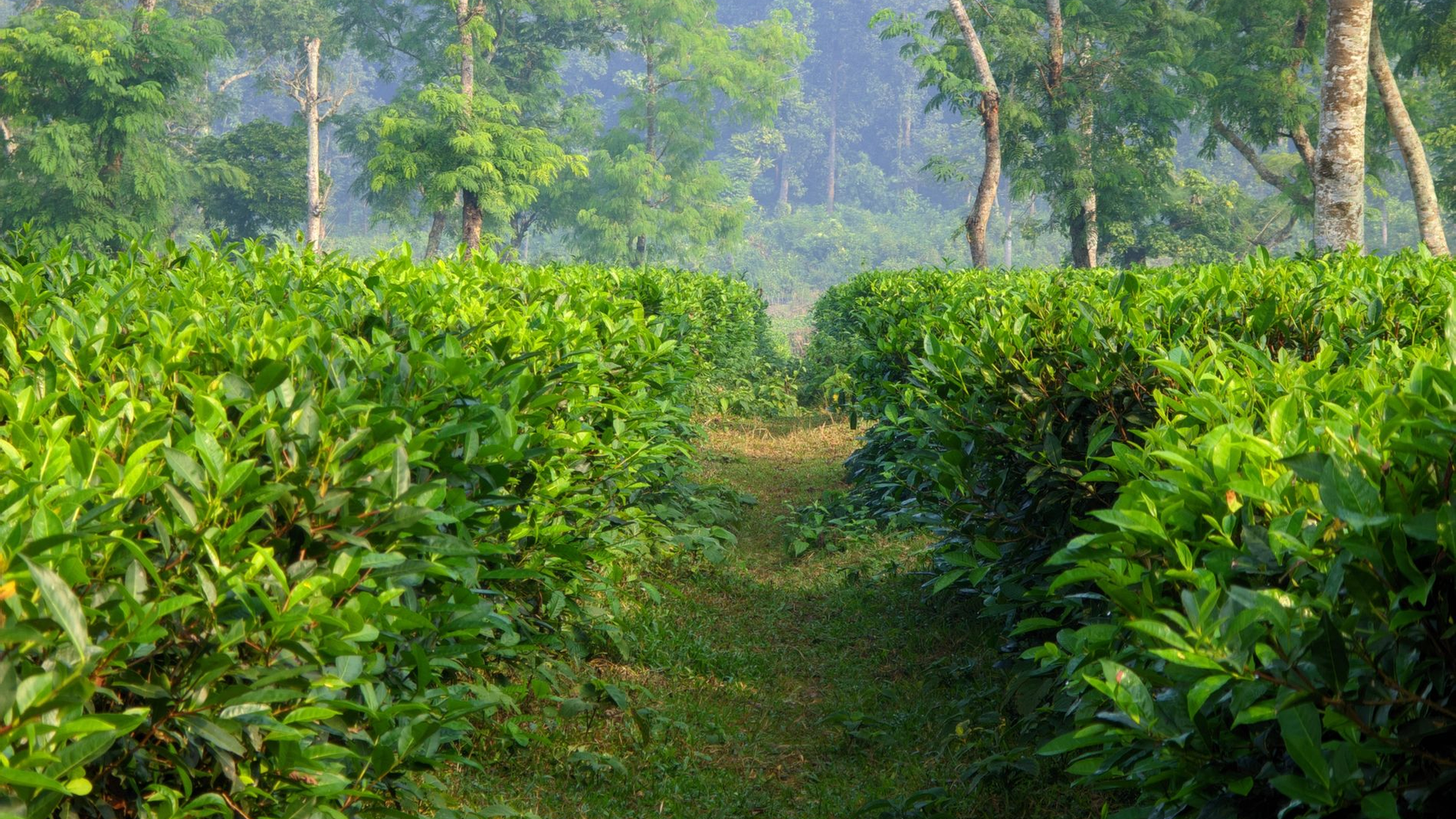
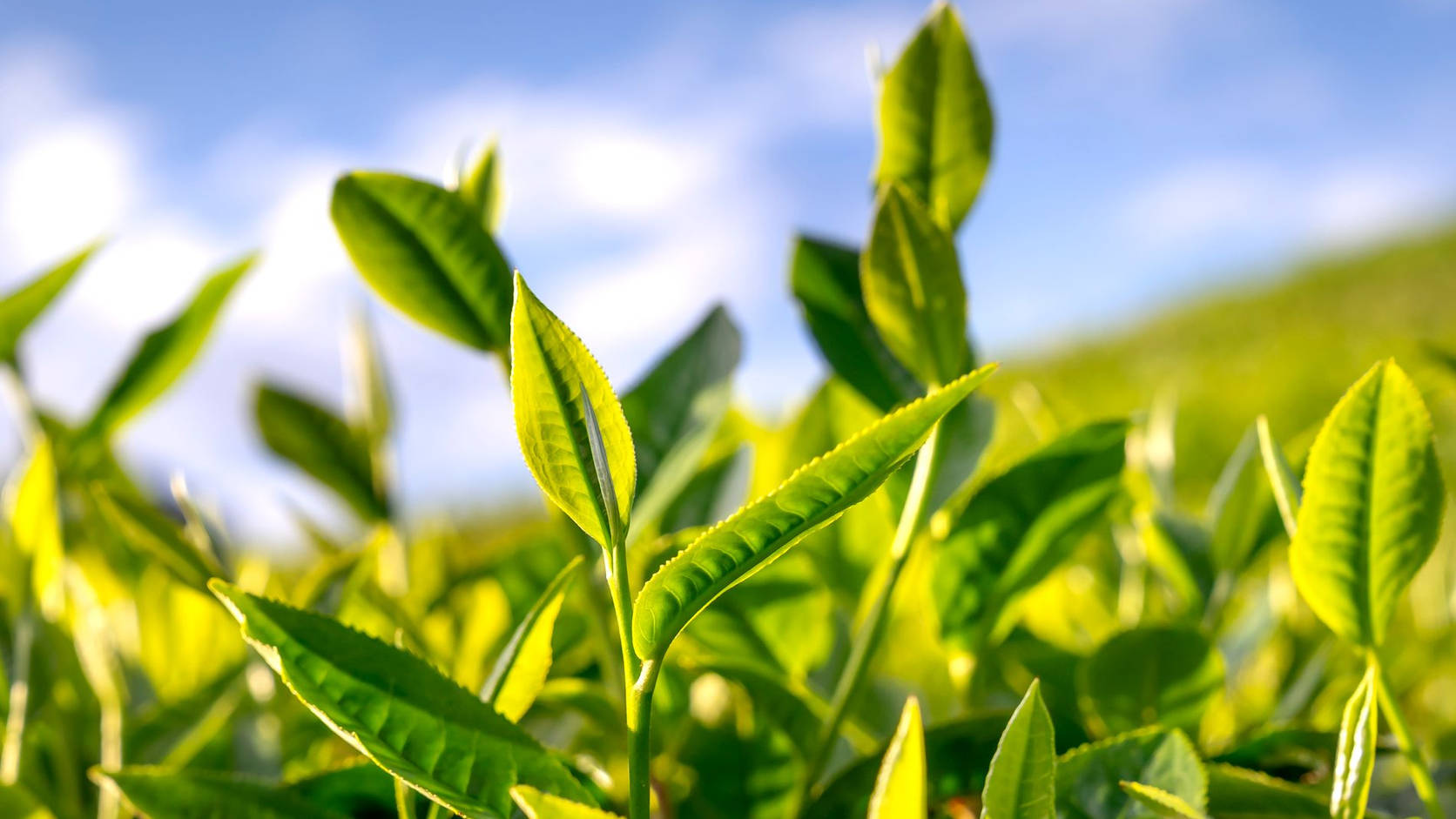
| Tea extraction | Tea input, plant part, extraction and purification records; material continuity to the isolated fraction; caffeine/catechin controls where required. | Tea-origin claim, caffeine status, extract versus purified ingredient. |
| Enzymatic conversion | Substrate and enzyme identity, reaction-stop and removal steps, route-related residues and related substances. | “Enzymatic” may describe several different processes. |
| Microbial fermentation | Whether the organism produces theanine directly or creates an intermediate; downstream purification, substrate and microbiology controls. | “Fermented” alone does not define the production sequence. |
| Chemical synthesis | Route statement, L-form evidence, residual reagents and related-substance controls for the actual process. | Assay percentage alone does not establish stereochemistry. |
The route-specific questions to send with an RFQ
Start with the exact grade code and quote unit. Ask the supplier to identify the legal manufacturer, manufacturing site, production route, and whether the quoted material is the same grade represented by the sample and documents. If a distributor is answering, ask which statements come from the manufacturer and request the manufacturer’s current controlled specification.
For a tea-origin claim, ask for the tea species or material description, plant part, incoming raw-material lot records, extraction solvent, purification steps, and a traceability record connecting the tea input to the theanine fraction. Ask how the manufacturer defines “tea-derived”: does it mean extracted from tea, or does the phrase describe the botanical origin of a starting substrate used in a later reaction? Those are not equivalent claims.
For an enzyme route, ask which substrate and enzyme are used, whether the enzyme is immobilized or added directly, how the reaction is stopped, and how enzyme or process aids are removed. Ask what route-related residues and by-products are specified and tested. A vendor does not need to disclose proprietary operating parameters to answer whether the process is enzymatic and how the finished material is controlled.
For microbial fermentation, ask whether theanine is produced by the microorganism itself or whether a fermentation-derived intermediate is later converted enzymatically. Request a concise process flow, organism or production-system statement to the extent the supplier discloses it, downstream purification summary, and the controls used for residual substrates, process aids, and microbiological quality. “Fermented” is too broad to distinguish direct microbial production from a multi-step bioconversion.
For chemical synthesis, request a route statement and the residual-reagent or related-substance controls linked to that route. The key question is not whether the word “synthetic” appears on a sales sheet; it is whether the lot’s identity, stereochemical form, assay basis, and relevant impurities are established by appropriate methods.
What the COA can prove and what it cannot
A lot-specific certificate of analysis should identify the product, grade, batch, test date, specification, result, method, and analytical basis. Confirm that the quoted batch number matches the sample or production lot under review. A product-page specification, a typical COA, and a batch COA are three different pieces of evidence.
Assay answers a quantitative question within the method’s scope. It does not automatically establish that the result is specific to L-theanine, distinguish L- from D-theanine, prove tea origin, or show that caffeine is absent. JHFC-S-039 specifically rejects total amino-acid testing as proof of theanine purity alone and calls for stereochemical identification support when the L-form is claimed.
Specific optical rotation can support identity when the method, solvent, concentration, temperature, wavelength, and acceptance range are stated. It is not a substitute for a complete impurity profile or process history. Likewise, a routine achiral HPLC assay may quantify a peak assigned to theanine while not separating enantiomers. If the source or label requires L-form evidence, ask the supplier to explain what method establishes stereochemical identity and what the result covers.
For a tea-derived grade, do not infer “caffeine-free” from a high theanine percentage. Request the caffeine test method, limit of quantitation or reporting threshold, result for the relevant lot, and any catechin or other tea-component controls required by your specification. For a reaction-derived product, ask for route-relevant residues and related substances rather than requesting a generic “purity certificate.” The analytes should follow the actual process and intended use.
How the route affects a practical comparison
Build the comparison around the attributes that change a purchasing decision. Do not compare suppliers on a single label claim or on price per kilogram alone. First, set the identity gate: L-theanine, CAS 3081-61-6, the required stereochemical form, physical form, and intended regulatory or customer grade. The CAS number is a useful identifier, not proof that the paperwork is correct.
Second, normalize assay. Check whether the result is on an as-is or dried basis, whether water or loss-on-drying is included, and whether methods are comparable. A stated 98% minimum and a 99% typical result are not directly comparable unless the method and basis align.
Third, specify route and disclosure level. If origin is not a product requirement, write “production route to be disclosed and controlled; no tea-origin claim required” rather than paying for a vague “natural” description. If botanical origin is required, define what “tea-derived” means in your supply specification and what chain-of-custody evidence will satisfy it.
Fourth, compare route-related controls, lot documents, sample availability, manufacturing-site continuity, and change notification. Only after these fields align should you compare quoted cost, MOQ, packaging, freight, and lead time. A lower quote may simply reflect a different source claim, test scope, or commercial unit.
The route itself is not a quality score. An enzymatic route can produce the L-form through stereospecific chemistry, but the buyer still needs identity and lot controls. A tea extract can carry meaningful plant-origin evidence while needing additional purification and tea-component testing. Chemical synthesis may be an acceptable option where the market permits it and the process-specific specification is met. The correct choice depends on the claim and control plan the finished product requires.
A sourcing lead for a tea-origin inquiry
An Alibaba listing from Shaanxi Hongda Phytochemistry Co., Ltd. is titled “Herb Extracts L-Theanine Powder Green Tea Extract 99% L Theanine.” The supplier profile showed 17 years on the platform, a 4.9/5 rating from 37 reviews, 86 units sold and a 1 kg minimum order. These are screening signals, not proof of route or quality. Hongda’s separate product page lists a 98% green-tea L-theanine grade; confirm the exact variant behind the 99% listing. Before approval, request the current specification, route statement, lot COA, tea-origin records, and caffeine result. The linked page confirms the product destination, not the order attribution or quality.
A sample and supplier-change plan
Do not approve a new route from a brochure or a small sample alone. Before sample purchase, freeze the target specification: identity, assay range and basis, moisture, related substances, stereochemical evidence, route statement, contaminants, microbiology where relevant, packaging, and storage. Mark which limits are mandatory and which are supplier-reported information.
During sample review, retain the supplier’s exact grade code and lot number. Have quality review the COA against the controlled specification. If route-related risks are important, request the supporting analytical report or a targeted third-party test. Run the intended use test: capsule blend, beverage, powder mix, or other matrix. A clear-water solubility test in a supplier document does not establish finished-product stability in an acidic beverage or a complex premix.
For a supplier or route change, compare the new and approved material side by side. Recheck identity, assay basis, stereochemical evidence, route-specific residues, and the properties that matter in your formula. Update raw-material and finished-product descriptions so an old “tea-derived” claim does not persist after a route or site change. JHFC-S-039 also calls for reassessment when the enzyme, extraction process, or tea-derived auxiliary material changes; that is a useful change-control model even when the buyer is not seeking that council’s evaluation.
A specification paragraph procurement can reuse
The following language is a starting point. Replace bracketed items with limits approved by quality and regulatory teams; do not copy a supplier’s specification into your purchase order without review.
“L-Theanine, CAS 3081-61-6; [food/supplement grade]; assay [range] by [method], reported on [as-is/dried] basis; L-form identity supported by [method/evidence]; moisture [limit and method]; related substances [defined limits]; route: [must disclose / specified route]; route-specific residues and accompanying tea components controlled to the attached specification; lot-specific COA required; batch, manufacturing site, and grade code must match approved sample; prior written notice required for changes to route, site, grade, specification, or test method.”
If tea origin is an explicit marketing claim, add the documentation that proves material continuity from tea input to the quoted purified fraction. If caffeine absence is claimed, add an agreed test method and threshold. Avoid the unsupported shorthand “natural, pure, caffeine-free” as a substitute for measurable acceptance criteria.
A worked decision
Imagine two quotations. Supplier A offers “99% natural tea L-theanine,” but its page identifies the product as a green-tea extract and provides no route statement or caffeine result. Supplier B offers “98% fermentation-derived L-theanine,” with a lot COA and a stated method, but does not disclose whether its process is microbial production or enzyme conversion.
Neither quotation is ready for approval. Supplier A needs an identity and matrix clarification: is this a purified crystalline ingredient or a standardized tea extract? The buyer needs the actual theanine assay, tea-origin records, and caffeine result. Supplier B needs the process description and stereochemical evidence, plus confirmation that the COA belongs to the lot being quoted. The 99% headline does not make A the winner, and the fermentation label does not make B the winner. The buyer can compare them only after both meet the same required specification.
If the product brief requires an evidenced tea-origin claim, Supplier A may remain under consideration if the records support it; Supplier B may be out of scope regardless of assay. If origin is not required, Supplier B may be simpler to qualify once the process and lot evidence are complete. The purchase decision follows the finished-product requirement, not a generalized assumption about which route is superior.
The decision buyers should record
Record four separate conclusions for every approved grade: material identity, stereochemical form, production route, and lot-level test evidence. Then record which of those facts may appear in external labeling or marketing. Keeping them separate prevents the most common substitution error: treating “same CAS” as proof of same origin, same impurities, or same label claim.
Before you place a repeat order, compare the incoming lot against the same specification and route statement used at approval. If the supplier changes a site, route, enzyme, tea input, analytical method, or source claim, reopen the relevant qualification step. A stable relationship with a vendor is useful operationally; it does not replace evidence that the material arriving today is the material your product was qualified with.
References
- Japan Certified Health Food Council. Theanine Quality and Labeling Standard JHFC-S-039. Enacted and effective September 7, 2026. https://www.jhfc.or.jp/en/standards/jhfc-s-039
- Therapeutic Goods Administration. Theanine: Compositional Guidelines. https://www.tga.gov.au/resources/resources/compositional-guidelines/theanine
- Zhu et al. From Tea Leaves to Factories: A Review of Research Progress in L-Theanine Biosynthesis and Production. Journal of Agricultural and Food Chemistry. 2021. DOI: 10.1021/acs.jafc.0c06694. https://pubmed.ncbi.nlm.nih.gov/33475342/
- Li et al. Production of L-Theanine by Escherichia coli in the Absence of Supplemental Ethylamine. Applied and Environmental Microbiology. 2021. DOI: 10.1128/AEM.00031-21. https://pmc.ncbi.nlm.nih.gov/articles/PMC8208135/
- Costa et al. Characterization of L-theanine in tea extracts and synthetic products using stable isotope ratio analysis. Journal of Food and Drug Analysis. 2021;29(2). https://pmc.ncbi.nlm.nih.gov/articles/PMC9261829/
- United States Pharmacopeia. Food Chemicals Codex: L-Theanine monograph description. 2023. https://doi.org/10.31003/FCC_F102529_05_01
Related content
Continue exploring related ingredient research and sourcing guides.
L-Theanine COA Checklist for Ingredient Buyers
A 98% HPLC result is only the headline. How to tie the L-theanine COA to a lot, read the assay basis, and keep L-form evidence separate from a routine non-chiral assay.
L-Theanine Powder vs Granules: How to Compare Active Content and Cost
A 98% powder and a 40% granule grade are not comparable by price per kilogram. How to normalise both quotes on active L-theanine, identify the carrier and decide the format on process evidence.
Creatine Monohydrate 200 Mesh vs Micronized: What Buyers Should Verify
A 200-mesh claim and the word micronized are both shorthand. What each one can and cannot tell you, when sieve analysis is enough, and how to write a particle-size limit that a lot has to meet.
80 Mesh vs 200 Mesh Creatine Monohydrate: How Buyers Should Specify Particle Size
Mesh is a sieve shorthand, not a specification. How to make 80 and 200 mesh comparable, test dispersion at the intended dose, and write a particle-size limit into the RFQ.