Potassium Sorbate in Beverage Syrup: 6 Checks to Prevent Sorbic Acid Crystals
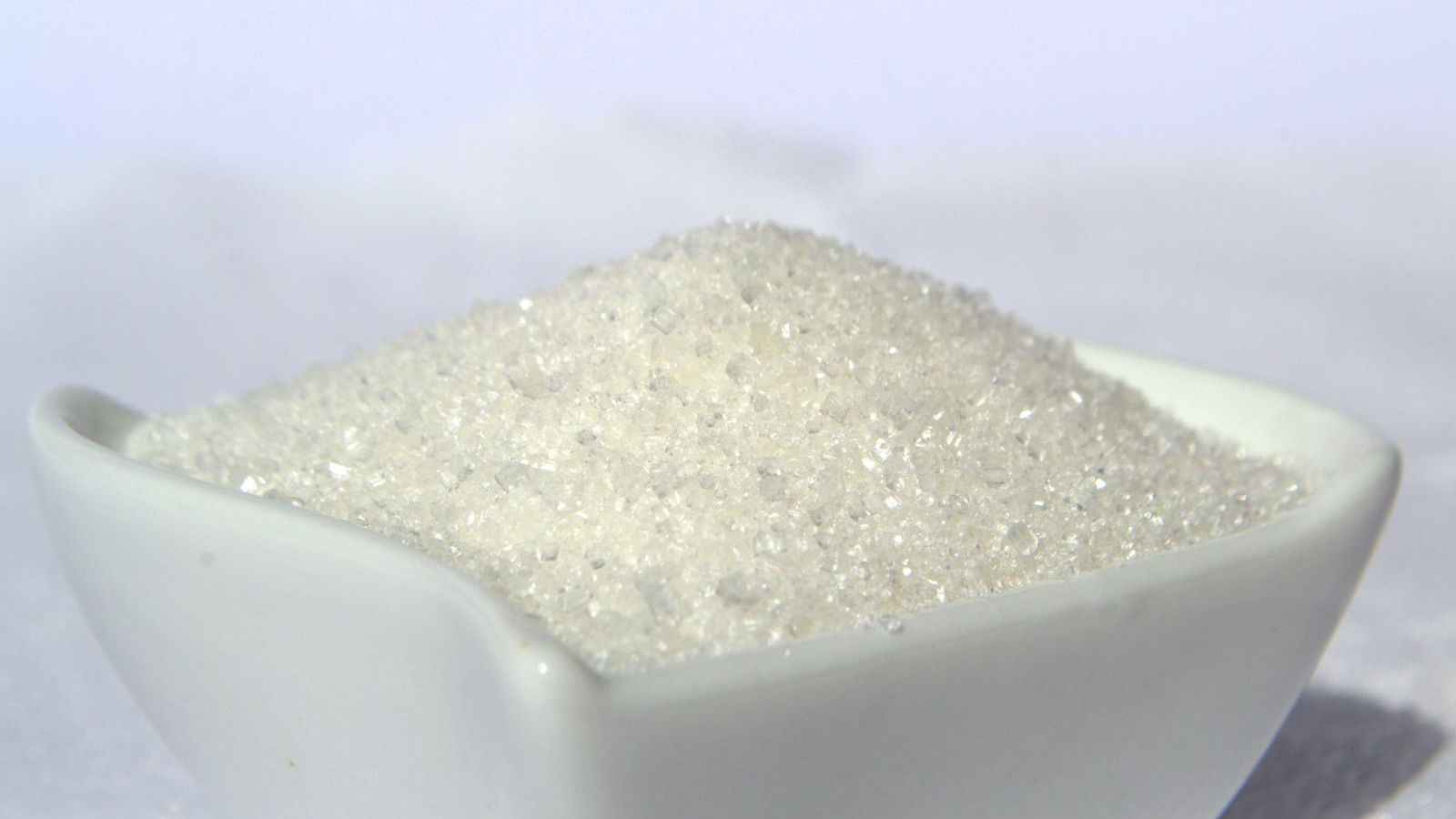
A clear potassium sorbate solution can still produce crystals after it enters an acidic beverage syrup. The salt dissolves readily in water; acidification shifts part of it into sorbic acid, which is much less water-soluble. Concentrated sugar can make that second form harder to keep dissolved. The useful question is therefore not simply “Does potassium sorbate dissolve?” It is “Does the complete syrup remain physically stable after the salt changes form, at the actual pH, Brix, temperature and storage time?”
For a new syrup, dissolve the preservative in a measured water phase before exposing it to the full acid and sugar load, then add acid under controlled mixing and inspect both the concentrate and its intended dilution. Treat that as a screening sequence, not a universal manufacturing formula. A published beverage recipe or winery instruction cannot establish a safe addition rate or shelf life for a different product. First confirm the allowed use and level for the product category and sales market; then validate clarity, preservative concentration and microbial performance in the actual process.
Quick Answer
Potassium sorbate is the salt of a weak acid, so crystals can appear when the acidified syrup holds less of the sorbic-acid form than the formula assumes. Recalculate the load on a finished-drink basis, treat the acid-addition order as a process variable, and include sugar, temperature and hold time in the bench matrix. If sediment appears, identify the crystals before changing the dose, and never raise pH simply to redissolve solids without a fresh safety review.
This distinction matters because the same raw-material name can describe two different practical situations: a very soluble potassium salt in water, and the less soluble sorbic acid that can form when a beverage is acidified. A powder that looks fully dissolved in the kettle is not proof that the packaged syrup will stay clear on a warehouse shelf.
1. Identify which material is dissolving
Potassium sorbate is the potassium salt of sorbic acid (INS 202; CAS 24634-61-5). The JECFA specification describes it as white or yellowish-white crystals, crystalline powder or granules, and “freely soluble in water.” Its official identity test deliberately acidifies a potassium sorbate solution and collects the resulting sorbic acid precipitate. That laboratory test is not a drink recipe, but it makes the chemical distinction visible: the dissolved salt and the acid formed after pH adjustment are not equally soluble species.[1]
Sorbic acid is a weak acid with a pKa commonly reported near 4.76. As pH falls, a larger proportion is in its undissociated acid form. The Henderson–Hasselbalch relationship can estimate that fraction in a simple aqueous system; for example, at pH 3.0, the idealized fraction is about 98%. This is an equilibrium estimate, not a preservative efficacy result and not a solubility guarantee. A beverage contains sugars, salts, flavors, juice solids and sometimes emulsions; those components alter the environment in which the acid must remain dispersed.[2,3]
The formulation consequence is easy to miss. Acidification may move the system toward the chemical form used for antimicrobial action while also increasing the chance that sorbic acid separates from solution. Those goals can pull in opposite directions. Do not “solve” crystals by raising pH or cutting preservative without a documented microbial and regulatory review.
2. Recalculate the load on a finished-drink basis
Before changing a process, reconcile the preservative amount in the concentrate with the amount in the ready-to-drink beverage. Record the syrup-to-water dilution ratio, batch mass, final pH and target sorbic-acid-equivalent concentration. The latter matters because potassium sorbate contains potassium counterion; a number reported as potassium sorbate is not numerically identical to a number expressed as sorbic acid.
Using molecular weights of 150.22 g/mol for potassium sorbate and 112.13 g/mol for sorbic acid, the theoretical conversion is:
sorbic-acid equivalent = potassium sorbate × (112.13 ÷ 150.22) ≈ potassium sorbate × 0.746.
Thus, 100 mg of potassium sorbate corresponds to about 74.6 mg of sorbic acid equivalent, before accounting for assay, moisture basis or processing losses. This is stoichiometric arithmetic, not a permission to use that level. Keep the raw-material assay basis and the jurisdiction’s legal expression in the same worksheet. The JECFA monograph lists an assay range on a dried basis; a supplier COA reported “as received” cannot be compared to it without checking the basis.[1]
For a concentrate intended for 1+5 dilution, six total parts of beverage arise from one part syrup plus five parts water. A first-pass mass balance would divide the amount carried by the syrup across those six parts, but confirm the plant’s actual dosing convention: some use volume ratios, some mass ratios, and density can make them differ. Include process additions after the syrup is made, such as flavor or juice, if they change the final mass or pH. If an analytical result is required, test the finished beverage with a validated method rather than inferring it from the weighed dose.
3. Treat acidification order as a risk variable, not folklore
A practical bench screen begins with the preservative dispersed or dissolved in the largest feasible low-sugar water phase. Add it under agitation, verify that no undissolved powder remains, and only then introduce acid in a controlled way. Add the sweetener and concentrated ingredients in the order used by the plant; do not assume that every formula should follow one universal sequence. The moment acid is added, the system can begin converting sorbate to sorbic acid, so pH and local mixing zones matter.
This is why “add the acid last” is a useful first experiment, but not a complete solution. A concentrated acid stream poured onto a poorly mixed sorbate solution can create a low-pH pocket with a much higher local acid fraction than the batch-average pH suggests. Meter the acid into a moving, well-mixed phase and record the point of addition, mixing time, temperature and pH after equilibration. A short trial can compare two realistic orders: sorbate into water before acid, and sorbate into a prepared syrup phase under the actual production sequence. Keep all other variables fixed.
Do not prepare and hold a concentrated potassium sorbate stock by habit. Eaton’s application-specific technical sheet for its wine stabilizer advises adding that product directly to the beverage rather than preparing a stock solution, and warns about precipitation at excessive dosage. This is a supplier instruction for a defined wine application, not a rule for every food. Ask the material supplier for a current, exact-grade dissolution recommendation, then test it in your matrix. The Eaton sheet is cited here as a supplier claim, not as an independent authority.
4. Include sugar, temperature and time in the trial
A water beaker is not a syrup model. A 1988 study measured sorbic-acid solubility in solutions containing sucrose, glucose, sorbitol and saccharin at 20°C and 37°C. Sucrose, glucose and sorbitol reduced the aqueous solubility of sorbic acid as their concentrations increased. Earlier compiled data likewise show much lower sorbic-acid solubility in a concentrated sucrose solution than in water. These are matrix observations, not an exact prediction for every commercial concentrate, but they explain why a clear dilute sample can fail after sweetening and acidification.[4]
Build a small matrix around the variables your process can actually hit: target pH and its lower tolerance, normal and high-end Brix, minimum and maximum process temperature, and the intended syrup dilution. Include a control without sorbate if the formula permits it; this helps distinguish sorbic-acid crystals from sugar, juice solids, flavor oil or mineral sediment. Record turbidity or visible particles at the same time points, and photograph samples against a consistent background. If crystals appear, collect and identify them where feasible. Haze alone does not identify the solid.
Run samples at the end of mixing, after cooling, after the concentrate’s expected hold, and after dilution. Include cold storage and realistic warm distribution conditions when relevant. Temperature cycling can reveal delayed crystallization that a warm freshly mixed sample hides. Avoid inventing a generic number of days or temperatures: use the product’s planned shelf life, distribution profile and quality plan. Accelerated storage can help rank prototypes, but a short stress test is not a validated shelf-life conversion.
The decision is not just whether a sample looks clear. A syrup may be clear but give an unacceptable diluted beverage, or a slight haze may come from another ingredient rather than sorbic acid. Pair physical inspection with pH, Brix, preservative assay where warranted, and a microbiological challenge or other validated preservation evidence. The endpoint should match the failure the buyer is trying to prevent.
5. Diagnose crystals before changing the preservative dose
When a batch develops sediment, preserve an unopened retain sample and document its lot, storage history, formula version and processing sequence. Check the basics in this order:
- Identity and dose: confirm the lot COA, assay basis, weighing record, scale calibration and concentrate-to-drink dilution.
- pH history: compare the calibrated final pH with the target and tolerance. Include pH at the point of sorbate addition if that measurement is part of the plant’s control plan.
- Mixing and addition: review acid feed location, agitation, hold time, water temperature and any undissolved solids observed during manufacture.
- Matrix changes: compare sugar source and Brix, juice or extract lots, alcohol, flavor carrier and mineral content with the last stable batch.
- Storage: check whether crystals appeared only after cooling, prolonged hold, shipment or temperature cycling.
A simple filtration test can show whether particles are present, but it cannot establish their chemical identity or recover the lost preservative fraction. If the solid matters to disposition, use a qualified laboratory to identify it and assay the liquid phase. Do not assume a filter fixes the underlying equilibrium: a clear filtrate can recrystallize later if the product remains supersaturated.
Do not raise the pH merely to redissolve solids without a new safety review. A pH shift changes preservative speciation and may affect microbial control, flavor, color, protein stability and other ingredients. Likewise, reducing the sorbate level may improve clarity while weakening the hurdle system. Any reformulation should pass separate gates for legal use, sensory acceptability, physical stability and microbial performance.
Sourcing candidate for buyer review
The Alibaba listing linked below is an inquiry starting point for the preservative purchase, not proof of beverage suitability. Confirm identity, assay basis, particle size and the supplier’s dissolve-and-hold guidance in writing.
6. Qualify the ingredient and the finished system separately
A supplier specification helps establish what arrived; it does not establish that a syrup will remain clear. For procurement, ask the vendor to state the exact grade and form being quoted, lot assay and basis, loss on drying, relevant food-grade specification, packaging, recommended storage and whether a sample can be supplied from the production lot. Ask for a current technical sheet that addresses the intended application. “Freely soluble in water” is not the same as “stable in 60° Brix syrup at pH 3.0.”
For a production trial, lock a written protocol before comparing suppliers. Use the same formula, batch size, process order, mixer, acid feed, package and storage conditions. Compare at least the incumbent and candidate lot when a source change is involved. Record dissolution time only as an operational metric; it does not substitute for finished-product stability. If supplier particle size or granulation changes, repeat the relevant handling and dissolution checks rather than assuming the result transfers.
The U.S. regulation lists potassium sorbate as GRAS when used in accordance with good manufacturing practice, and FDA’s food-substance inventory lists its technical effects. That is not a universal maximum for every beverage category or a blanket approval in other markets. EU rules, Codex provisions and national standards may define category-specific conditions. Before finalizing the trial, confirm the current additive permission, maximum level, labeling name and expression basis for the destination market and exact beverage category.[5–7]
A buyer’s release decision
A useful release file connects four things: incoming-lot identity, calculated dose, process record and finished-product evidence. It should identify the exact preservative lot and COA; show the conversion to sorbic-acid equivalent; record syrup and finished-drink pH/Brix; preserve acid-addition and mixing details; and include physical plus microbiological results at justified storage points. If any of these change—supplier, grade, flavor carrier, sweetener system, concentrate ratio, package or process—decide in advance which parts of the validation must be repeated.
The answer to “Can I dissolve potassium sorbate before adding it to syrup?” is yes, as a controlled screening approach—but the answer to “Will the syrup remain stable?” comes only from the acidified, sweetened system under its real storage conditions. Separate those questions, and you can distinguish a mixing problem from a solubility limit before a formula change turns a visible defect into a preservation failure.
References
- Joint FAO/WHO Expert Committee on Food Additives. Potassium Sorbate: Combined Compendium of Food Additive Specifications, Monograph 1 (1998). https://www.fao.org/fileadmin/user_upload/jecfa_additives/docs/Monograph1/Additive-349.pdf
- National Center for Biotechnology Information. PubChem Compound Summary: Sorbic Acid (CID 643460), pKa and solubility records. https://pubchem.ncbi.nlm.nih.gov/compound/Sorbic-Acid
- Freese E, Sheu CW, Galliers E. Function of lipophilic acids as antimicrobial food additives. Nature. 1973;241:321–325. https://doi.org/10.1038/241321a0
- Gooding CM, et al. Effect of some syrup constituents on the solubility of sorbic acid. Journal of Food Science. 1988. https://pubmed.ncbi.nlm.nih.gov/3411471/
- U.S. Food and Drug Administration. 21 CFR §182.3640, Potassium sorbate. https://www.ecfr.gov/current/title-21/chapter-I/subchapter-B/part-182/subpart-D/section-182.3640
- U.S. Food and Drug Administration. Substances Added to Food: Potassium Sorbate. https://hfpappexternal.fda.gov/scripts/fdcc/index.cfm?id=POTASSIUMSORBATE&set=FoodSubstances
- European Food Safety Authority. Scientific Opinion on the re-evaluation of sorbic acid (E 200), potassium sorbate (E 202) and calcium sorbate (E 203) as food additives. EFSA Journal. 2015;13(6):4144. https://doi.org/10.2903/j.efsa.2015.4144
Related content
Continue exploring related ingredient research and sourcing guides.
Sodium Benzoate and Vitamin C in Drinks: 7 Checks Before Approving the Preservative System
Benzoate plus ascorbic acid is not an automatic benzene problem, but it is a system that needs evidence. Seven checks that separate the chemistry from the microbial problem before a vitamin C drink is approved.
Does Sodium Benzoate Work at pH 4.2? How Beverage Buyers Should Use the Active-Fraction Calculation
Around pH 4.2 roughly half of benzoic-acid species sits undissociated, so a small pH shift changes the estimated active fraction noticeably. What that number does and does not tell a beverage buyer, and the review it should trigger.
Creatine Monohydrate 200 Mesh vs Micronized: What Buyers Should Verify
A 200-mesh claim and the word micronized are both shorthand. What each one can and cannot tell you, when sieve analysis is enough, and how to write a particle-size limit that a lot has to meet.
80 Mesh vs 200 Mesh Creatine Monohydrate: How Buyers Should Specify Particle Size
Mesh is a sieve shorthand, not a specification. How to make 80 and 200 mesh comparable, test dispersion at the intended dose, and write a particle-size limit into the RFQ.