Does Sodium Benzoate Work at pH 4.2? How Beverage Buyers Should Use the Active-Fraction Calculation
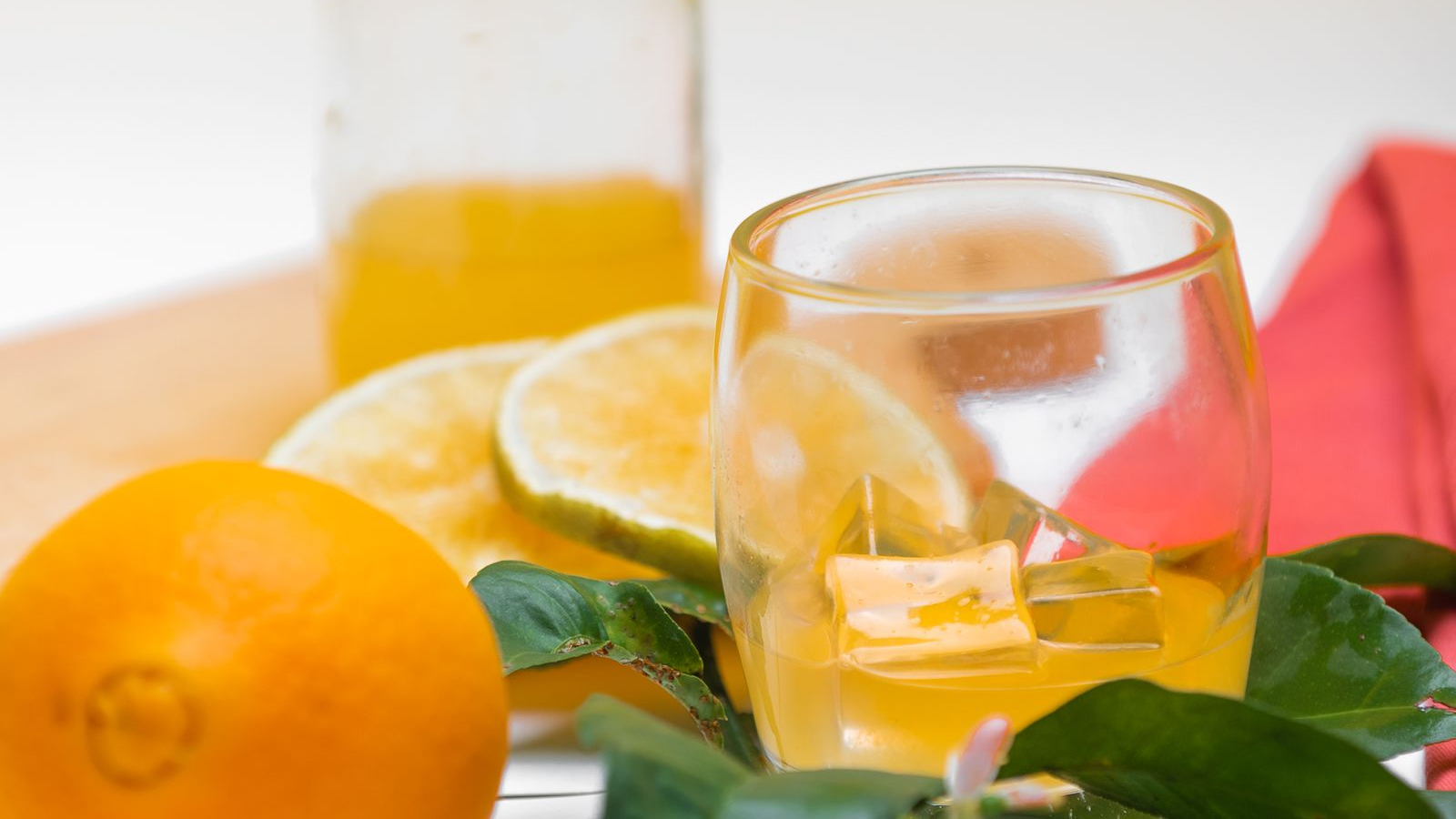
A drink that moves from pH 3.8 to 4.2 has not crossed a universal “preservative failure” line. But the change is not trivial: it shifts the equilibrium between benzoate ion and undissociated benzoic acid, the form generally associated with stronger antimicrobial action. That calculation is a useful screening signal. It cannot tell you whether a finished beverage will remain stable through its intended shelf life.
For a buyer or formulator, the practical sequence is: confirm the final equilibrated pH, calculate the approximate undissociated fraction, check the permitted use for the exact food category and market, then validate the complete formulation and process with an appropriate microbiological program. Do not increase sodium benzoate by rule of thumb when pH rises.
Quick Answer
At pH 4.2 the equilibrium estimate puts roughly half of benzoic-acid species in the undissociated form, down from about 72% at pH 3.8. That shift is a chemical signal, not a shelf-life verdict: microbial inhibition also depends on the organisms present, the rest of the hurdle system and the finished-product matrix. Treat a pH increase as a formulation change that triggers a review, keep the estimate as a screening note, and validate with a formula-specific challenge test.
What changes when pH moves from 3.8 to 4.2?
Sodium benzoate dissolves as sodium and benzoate ions. In an acidic drink, some benzoate accepts a proton and exists as benzoic acid. Benzoic acid has a pKa near 4.20 at 25°C.[1] The Henderson–Hasselbalch relationship gives a first estimate of the undissociated share:
Undissociated fraction = 1 / (1 + 10^(pH − pKa))
Using pKa 4.20 as an approximate reference:
| Finished beverage pH | Estimated undissociated benzoic acid | What the calculation says |
|---|---|---|
| 3.0 | 94% | Most benzoic species is undissociated |
| 3.5 | 83% | A high fraction remains undissociated |
| 3.8 | 72% | About seven in ten are undissociated |
| 4.0 | 61% | A 0.2-unit shift changes the estimate |
| 4.2 | 50% | Near the pKa, the two forms are roughly equal |
| 4.5 | 33% | A smaller fraction is undissociated |
These are equilibrium estimates, not finished-product efficacy limits. Moving from pH 3.8 to 4.2 reduces the estimated fraction from about 72% to 50%, roughly a 30% relative decrease. It does not mean microbial control falls by exactly 30%, or that the beverage will spoil. Organisms, preservative concentration, acid type, water activity, package, heat treatment, filling hygiene and storage all influence the result.
A second conversion can help normalize a formula. Sodium benzoate has a molecular weight of about 144.11 g/mol and benzoic acid about 122.12 g/mol. If a model uses 100 mg/L sodium benzoate, its theoretical benzoic-acid equivalent is about 84.7 mg/L before applying the pH fraction. At pH 4.2, that corresponds to roughly 42 mg/L undissociated benzoic-acid equivalent. This is a calculation aid—not a regulatory allowance, dose recommendation or microbiological prediction. Use the specific regulatory expression required in the market where the drink will be sold.
Why the fraction is not a shelf-life prediction
The equation describes acid-base equilibrium in an idealized system. Microbial inhibition is biological. It depends on which spoilage yeasts, molds or bacteria are present and how they respond to the beverage matrix. The pH value does not identify the organism, quantify the preservative delivered to it, or account for contamination introduced during filling.
A cold-filled ready-to-drink beverage study examined pH 2.8, 3.3 and 3.8 alongside sodium benzoate, potassium sorbate, sugar and titratable acidity. In the tested formula and concentration ranges, pH and both preservatives affected the probability of yeast growth; interactions between pH and preservative level also mattered.[2] Some tested combinations still showed growth. The model was useful for comparing formulations and designing experiments, not for declaring every commercial drink safe or stable at a given pH.
That distinction is why total acidity and pH should not be used interchangeably. pH measures hydrogen-ion activity at the time of measurement. Titratable acidity describes the amount of base needed to neutralize the sample to a defined endpoint. Two drinks can have the same pH but different acid reserves, buffering, taste and ingredient interactions. A formula may also drift after flavor, juice, mineral salts or a fortification premix is added. Measure the finished, equilibrated product with a calibrated instrument and a written sample-preparation method—not just the acidified water before the rest of the ingredients go in.
Temperature and sample handling matter too. Carbonated drinks should be measured with a consistent procedure because dissolved carbon dioxide affects pH. Record whether the sample is measured as sold or after controlled degassing, its temperature, calibration buffers and measurement time. Use the same method for pilot and production batches so a 0.2-unit change is not an artifact of handling.
How much should a 0.1- or 0.2-unit shift change the review?
Near the pKa, small pH differences change the estimated equilibrium fraction noticeably. With pKa 4.20, pH 4.1 gives about 56% undissociated benzoic acid; pH 4.3 gives about 44%. A 0.2-unit shift around this point changes the estimate by roughly 11 percentage points. That is a reason to set a meaningful finished-product pH specification and measure it reliably. It is not a reason to treat each decimal as an efficacy switch.
A handheld meter that is not calibrated, a sample measured warm against a room-temperature standard, or a carbonated sample handled inconsistently can obscure the very shift the calculation is meant to interpret. Calibrate with fresh buffers bracketing the expected range, verify the electrode is suitable for the beverage, and record temperature. If production lots sit near an internal limit, define what happens when a result is within the method’s uncertainty: repeat the measurement, investigate the batch and hold release according to the site’s quality system. Do not “correct” a borderline reading by adding more preservative before confirming the actual pH and applicable legal maximum.
It is also useful to distinguish a target from a guard band. The target pH belongs to the formula and process; the operating range should account for realistic variation in ingredients, water, blending and measurement. Challenge-test the edge of that range likely to provide the least protection, not only a convenient center-point batch. If the team narrows pH tolerance to reduce preservative dependence, make sure that the acid adjustment remains acceptable for flavor, process capability and the marketed product.
When should a buyer reconsider the preservative system?
Treat a pH increase as a formulation change that triggers review, especially if it moves the finished product toward or above the benzoic-acid pKa. Recheck the exact preservative level, target organisms, process, package and shelf-life claim. A pH adjustment may also change flavor, color, clouding, mineral behavior or the stability of vitamins and flavors. Do not compensate by raising the preservative without confirming legal limits and sensory acceptance.
Potassium sorbate is often considered alongside sodium benzoate in acidic beverages, but comparing their pKa values alone cannot select a winner. Sorbic acid has a higher pKa, yet the antimicrobial spectrum and response differ by organism and food matrix. In the 2002 beverage model, the preservatives did not behave as independent variables; that finding is specific to the tested system and does not establish a universal synergy or antagonism.[2] A blend can be worth screening, but it must be assessed at the actual pH, concentration, process and target organisms.
Ask the lab to test the likely spoilage organisms for the beverage category, not merely a convenient generic yeast. Yeasts such as Zygosaccharomyces bailii can tolerate acidic conditions and challenge weak preservative systems. The right organism panel and acceptance criteria should be agreed with a qualified food microbiology laboratory or process authority. A bench calculation can narrow the test plan; it cannot replace a challenge study or a validated thermal/filling process where one is needed.
Check legality and the ascorbic-acid interaction separately
A technically effective concentration is not automatically permitted for every product. Regulations vary by country and food category, and some rules express limits as benzoic acid or as a combined amount of benzoates. In the United States, FDA lists sodium benzoate under 21 CFR 184.1733 for use under good manufacturing practice; the provision does not create a universal beverage dose for every jurisdiction or product.[3] Confirm the current rule for the destination market, category, labeling and combined preservative system before locking a specification.
There is another formulation check for drinks containing both benzoate salts and ascorbic acid (vitamin C). FDA notes that small amounts of benzene may form in some beverages containing both, with heat and light among factors that can stimulate formation.[4] This is not a reason to assume every such beverage is hazardous. It is a reason to assess the specific formula, raw-material contributions, trace-metal controls, packaging and storage exposure. Where relevant, include a documented risk review and appropriate analytical or accelerated testing rather than relying on a supplier’s generic statement.
A practical pH-change review for procurement and R&D
When a formulation moves from, for example, pH 3.8 to 4.2, use a short decision record:
- Lock the sample definition. State finished-product pH, measurement temperature, degassing procedure, batch age and instrument calibration. Confirm that the pH is stable after all ingredients are added.
- Normalize the preservative basis. Record whether the specification and formula refer to sodium benzoate mass, benzoic-acid equivalent, or a combined benzoate limit. Check assay, moisture basis and the batch COA before comparing supplier offers.
- Calculate only the chemical shift. Use the pKa equation to estimate the fraction at each pH. Keep the result beside the formula as a screening note, not as the pass/fail criterion.
- Review the whole hurdle system. Include heat treatment, fill temperature, hygiene, package, oxygen exposure, water activity, acid profile, sweetener, juice solids and any sorbate or other permitted hurdle.
- Run a formula-specific validation. Ask a qualified laboratory to define challenge organisms, inoculation levels, storage conditions, sampling points, replicates and acceptance criteria. Include the intended package and realistic storage conditions.
- Recheck sensory and compliance. Taste at the proposed maximum permitted level, review label declarations, and confirm that the product category and market allow the system as used.
Keep the supplier specification and the finished-drink validation separate. The ingredient supplier can establish identity, food-grade specification, assay, contaminants, packaging and batch traceability. Only the beverage maker can validate the combined formula, process, package and shelf-life target. A COA that says “99%” or “food grade” does not certify preservative performance in your drink.
Sourcing candidate for buyer review
The two Alibaba listings below are inquiry routes for a preservative RFQ, not supplier rankings or evidence that either grade is already qualified for your formula. Use them to request the specification basis, lot documentation and a sample.
Separate a preservative screen from shelf-life validation
A useful pilot does not need to begin with a large matrix of every possible ingredient. First confirm the finished drink’s pH, preservative assay and process parameters in representative batches. A small bench screen can compare the current formula with the proposed pH range while holding preservative level, package and process constant. This answers whether the change deserves a full validation and helps reveal sensory or physical problems before a microbiology study is commissioned.
Once the formula is stable, the microbiology plan should reflect the intended claim. Agree on organisms, inoculum preparation, storage temperatures, sampling schedule, replicate count, recovery method and pass criteria with the qualified laboratory. Include normal and reasonably adverse product conditions where appropriate, such as the upper pH edge or a warm-distribution scenario. A model beverage paper can help choose factors, but its yeast strains, concentration ranges and storage conditions are not your product specification. Nor does a spoilage-yeast test automatically validate control of pathogens. Use a process authority or food-safety specialist where the product and jurisdiction require a separate safety assessment.
Keep retained samples and the study protocol with the formula version. If the supplier, preservative form, process, package, acid system or pH range changes later, compare the new version with the validated baseline and decide whether re-testing is needed. This makes repeat purchases easier to qualify: the incoming raw material is checked against its own specification, while the finished drink is checked against the validated performance target.
What to request when comparing sodium benzoate offers
For an ingredient quotation, request the exact grade and manufacturer, food-additive specification used, assay method and result basis, lot-specific COA, moisture, relevant impurity limits, manufacturing site, pack size, storage conditions and certificate scope. Ask whether the quoted material is powder, granular or another form; form affects handling and dissolution but does not prove superior preservation. Confirm that sample, quotation and production order refer to the same manufacturer and grade. If the supplier proposes a blend, request the full composition and do not treat its total mass as pure sodium benzoate.
The decision to make at pH 4.2
At pH 4.2, about half of benzoic-acid species is estimated to be undissociated at 25°C. That is useful chemistry, not a shelf-life promise. The meaningful purchasing decision is whether the actual ingredient, legal use level, finished formula, process and package pass a documented validation against the organisms and storage conditions that matter to your product. If one changes, reopen the validation rather than relying on the old pH number.
References
- National Library of Medicine. https://pubchem.ncbi.nlm.nih.gov/compound/243. pKa 4.20 at 25°C.
- Battey AS, Duffy S, Schaffner DW. https://doi.org/10.1128/AEM.68.4.1901-1906.2002. Applied and Environmental Microbiology. 2002;68(4):1901–1906.
- U.S. Food and Drug Administration. https://www.ecfr.gov/current/title-21/section-184.1733; https://hfpappexternal.fda.gov/scripts/fdcc/index.cfm?id=SODIUMBENZOATE&set=FoodSubstances.
- U.S. Food and Drug Administration. https://www.fda.gov/food/environmental-contaminants-food/questions-and-answers-occurrence-benzene-soft-drinks-and-other-beverages.
- Codex Alimentarius. https://www.fao.org/gsfaonline/. Check the current food-category and additive provisions for the destination market.
Related content
Continue exploring related ingredient research and sourcing guides.
Potassium Sorbate in Beverage Syrup: 6 Checks to Prevent Sorbic Acid Crystals
A clear potassium sorbate solution can still throw crystals once it meets an acidic syrup. Six checks, from the sorbate equivalence calculation to the acid-addition order and the trial matrix that proves a hold time.
Sodium Benzoate and Vitamin C in Drinks: 7 Checks Before Approving the Preservative System
Benzoate plus ascorbic acid is not an automatic benzene problem, but it is a system that needs evidence. Seven checks that separate the chemistry from the microbial problem before a vitamin C drink is approved.
Creatine Monohydrate 200 Mesh vs Micronized: What Buyers Should Verify
A 200-mesh claim and the word micronized are both shorthand. What each one can and cannot tell you, when sieve analysis is enough, and how to write a particle-size limit that a lot has to meet.
80 Mesh vs 200 Mesh Creatine Monohydrate: How Buyers Should Specify Particle Size
Mesh is a sieve shorthand, not a specification. How to make 80 and 200 mesh comparable, test dispersion at the intended dose, and write a particle-size limit into the RFQ.